
 Statement
KIFOV’s position on AI-generated child sexual abuse material
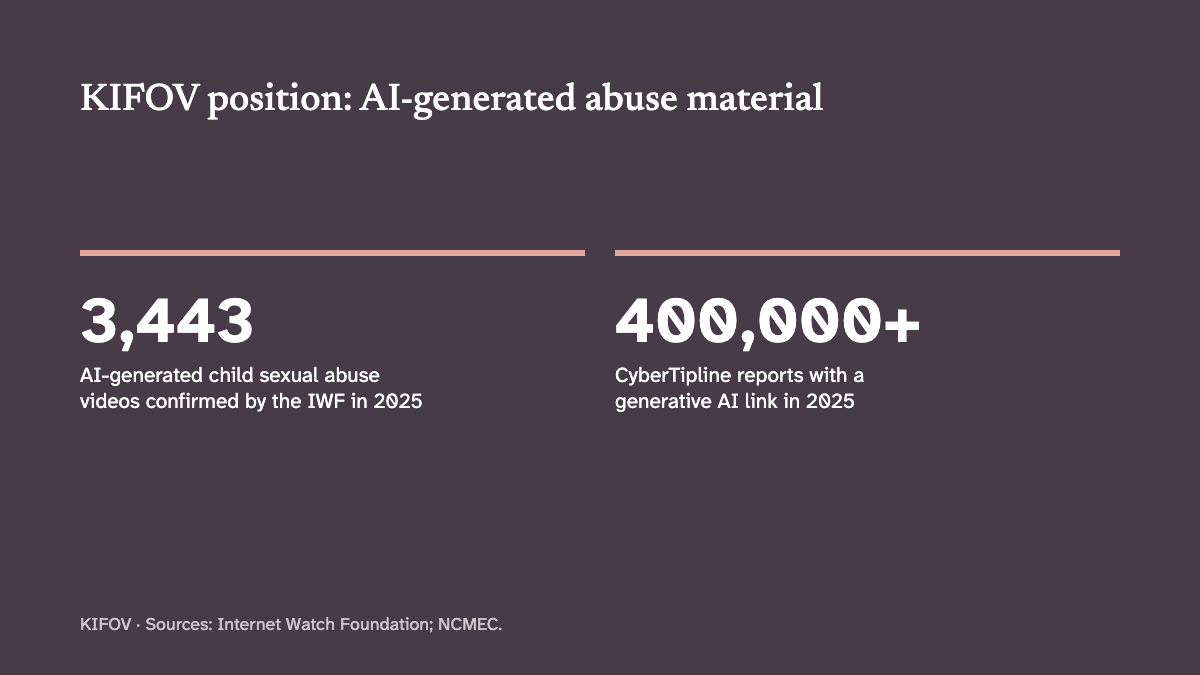
Realistic sexual images of children made with AI are abuse material. They should be treated in law, by platforms and by AI companies exactly as such.
Research & stories
Guides, research, investigations and reporting from KIFOV. Every piece is labelled by type, dated, attributed and sourced, so you can tell our own findings from what others have reported.
Statement
KIFOV’s position on AI-generated child sexual abuse material
Realistic sexual images of children made with AI are abuse material. They should be treated in law, by platforms and by AI companies exactly as such.
 Research
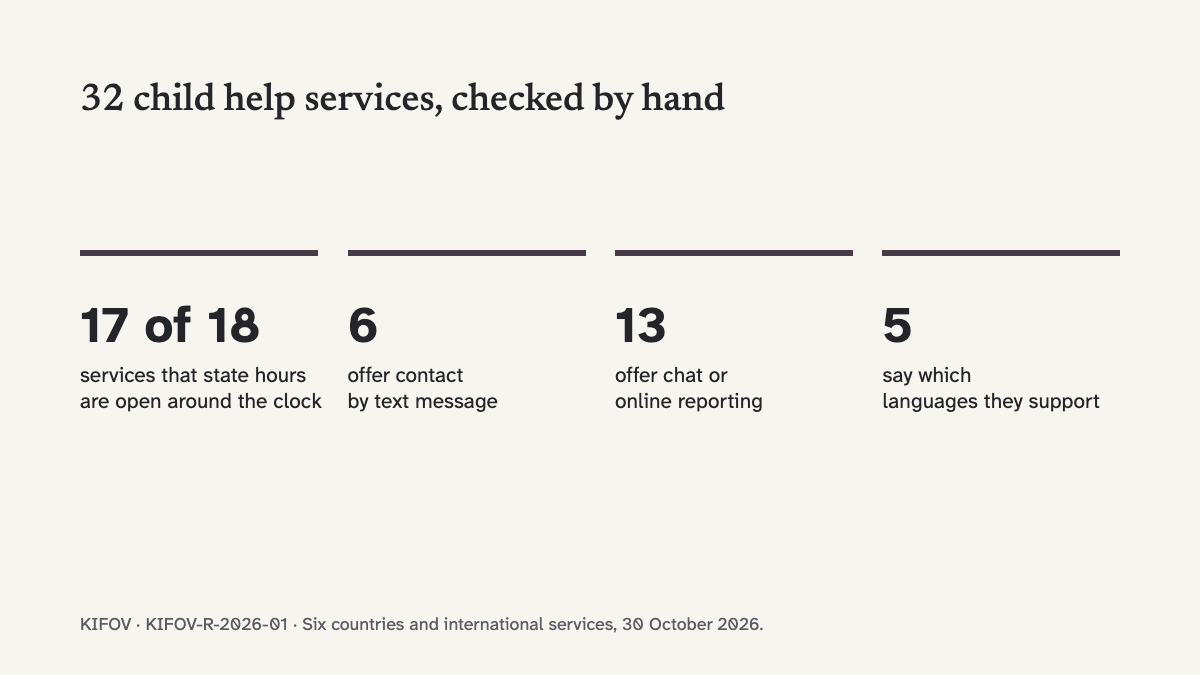
What we found checking 32 child help services in six countries
Every country we covered has a free child helpline and an emergency number. Fewer offer text, a route for young people to remove their own images, or say which languages they support.
 Impact
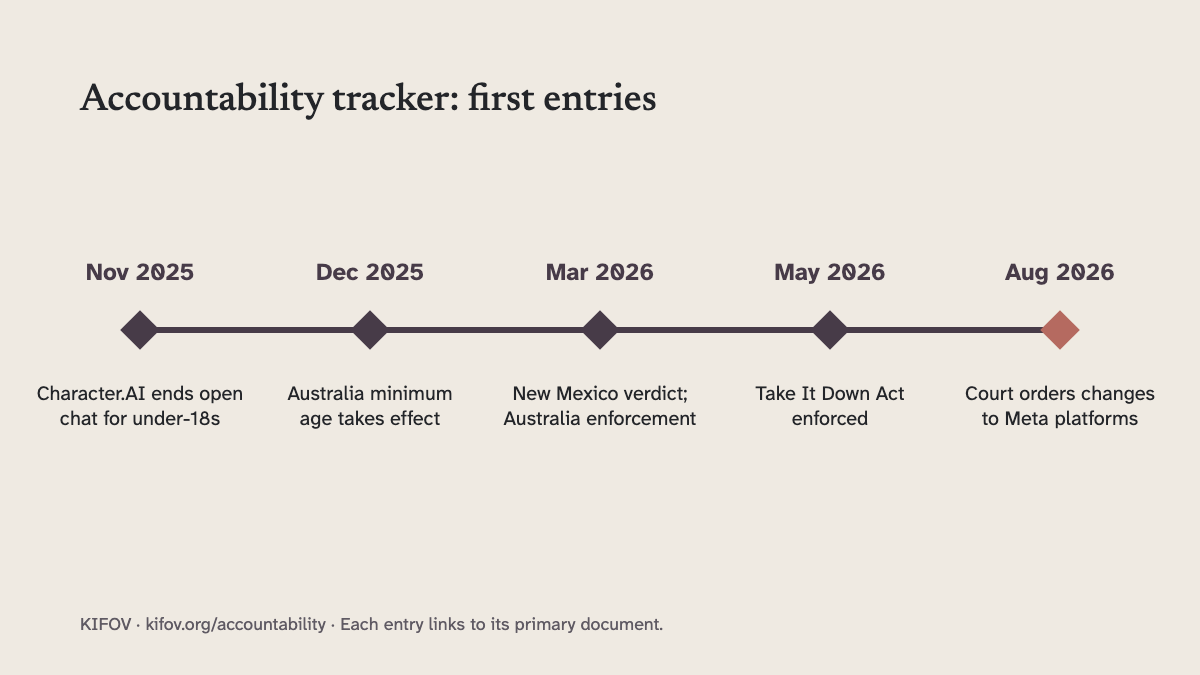
KIFOV launches its accountability tracker, starting with seven decisions that change what platforms must do for children
Court rulings, laws and company changes from four jurisdictions, each linked to the original document and to our analysis.
 Impact
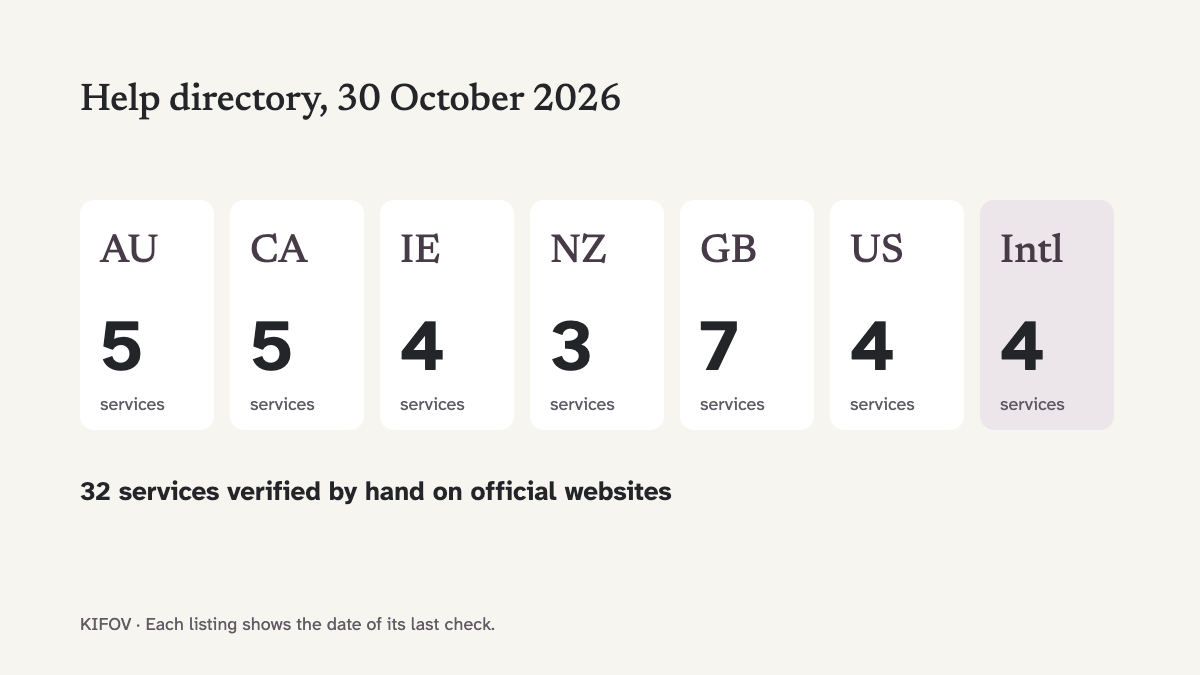
The KIFOV help directory now covers six countries and 32 verified services
In its first days, the directory grew from four countries to six. Every listing was checked by hand on the service's own site.
 Research
KIFOV Briefing, October 2026: children’s safety online, where things stand
A compact reference for journalists, policymakers and professionals: the latest data on harm to children online, what courts and regulators now require of platforms, and verified routes to help.
 Explainer
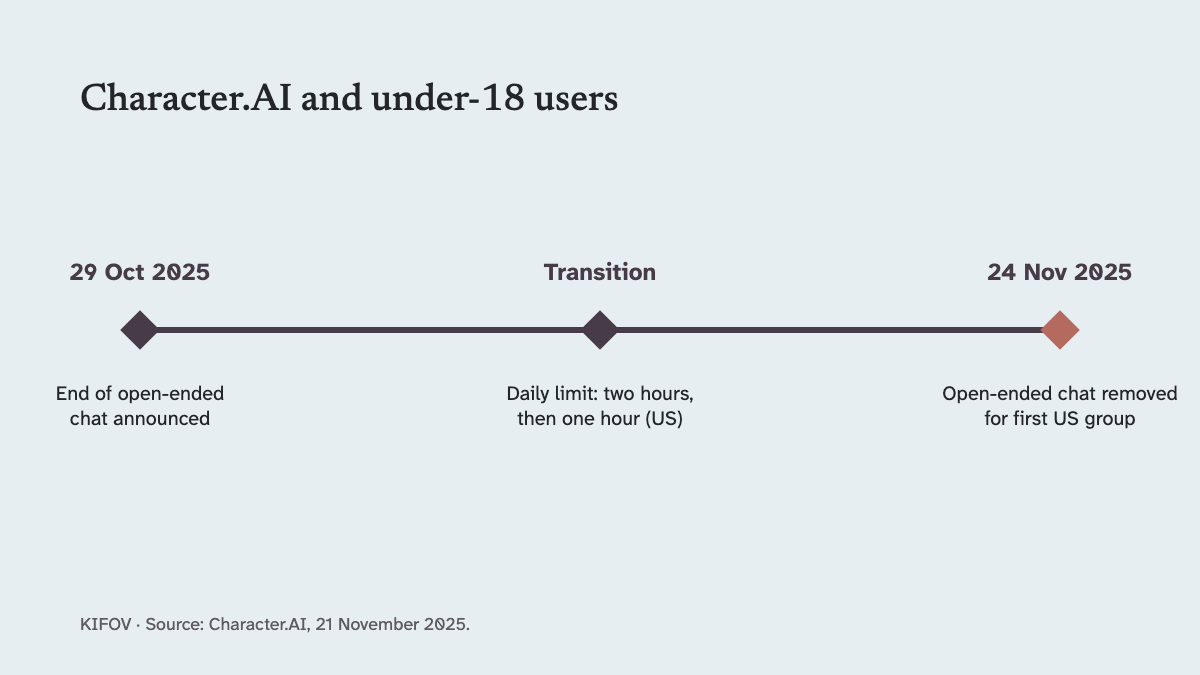
AI companion chatbots and teenagers: what changed when Character.AI ended open-ended chat for under-18s
One of the best-known companion apps stopped letting teenagers chat freely with its AI characters. What the company changed, why it matters, and what parents can ask about the apps their children use.
 Guide
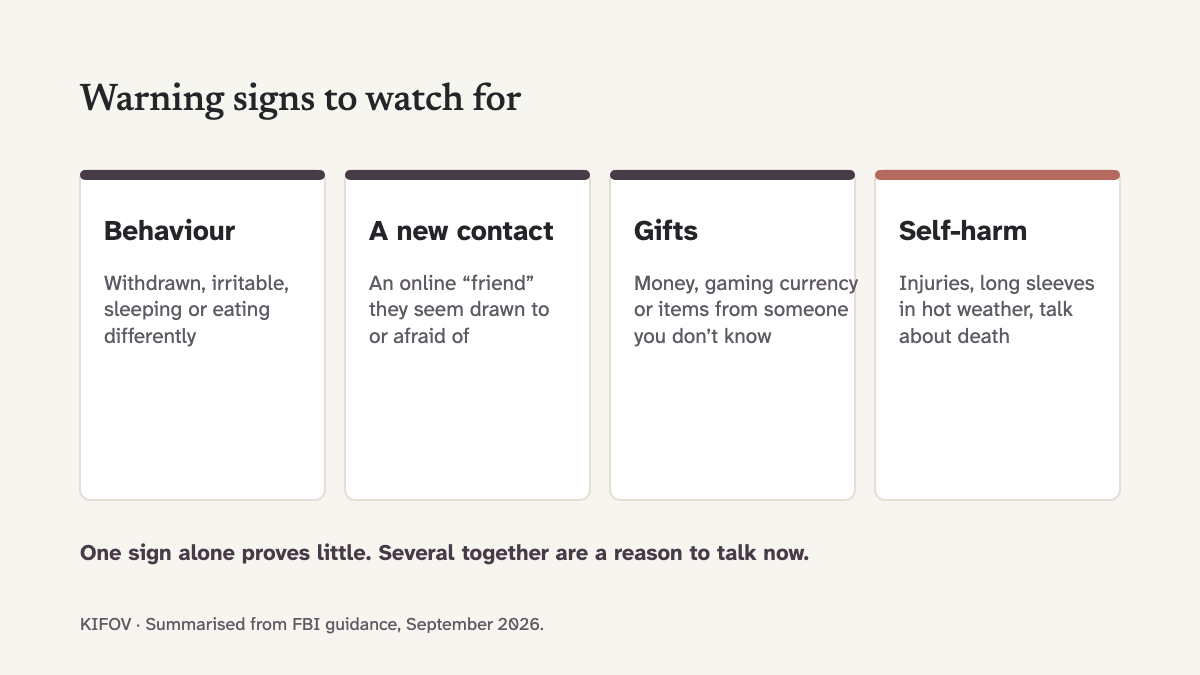
Violent online networks that target children: the warning signs the FBI wants parents to know
Groups such as “764” groom children on ordinary apps and games, then coerce them into harming themselves and others. Knowing the signs early is what makes a difference.
 Explainer
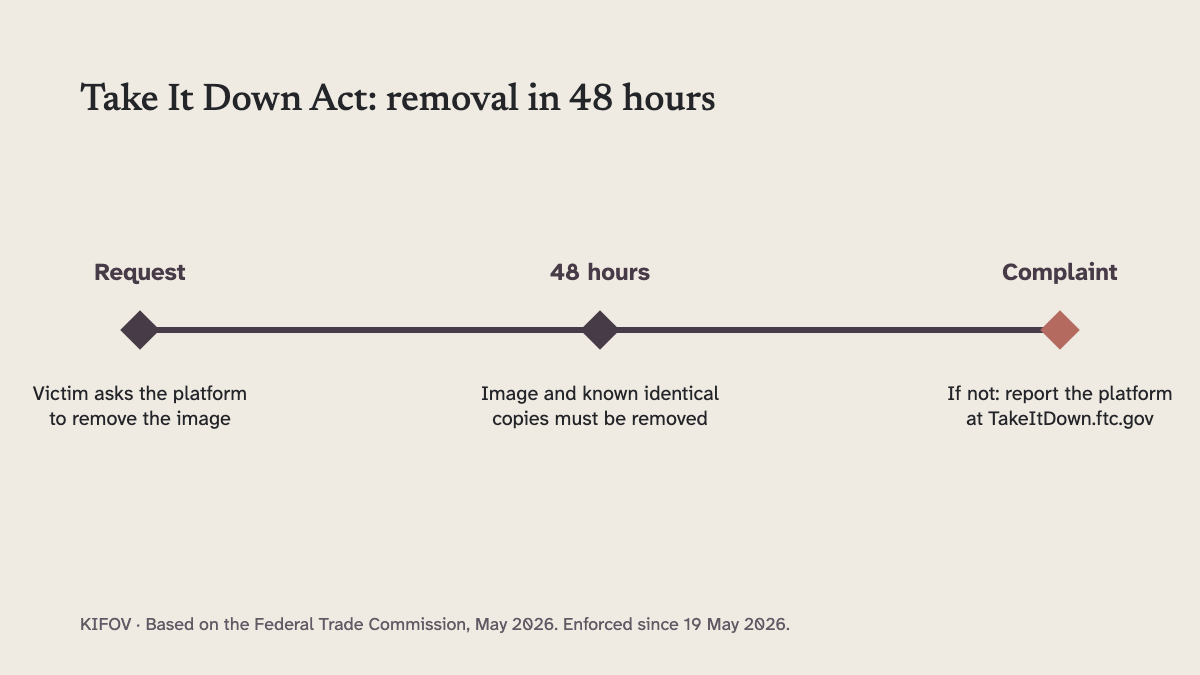
The Take It Down Act is now enforced: how to get an intimate image removed in the United States
Since 19 May 2026, platforms in the US must remove reported intimate images, including AI-made fakes, within 48 hours. Here is how the process works, and how it fits with the services young people already use.
 Statement
Why KIFOV starts with a help directory, not a hotline
We could have launched with a reporting form and big promises. We chose to begin with something smaller that works: a checked, dated route to the people who can act.
 Guide
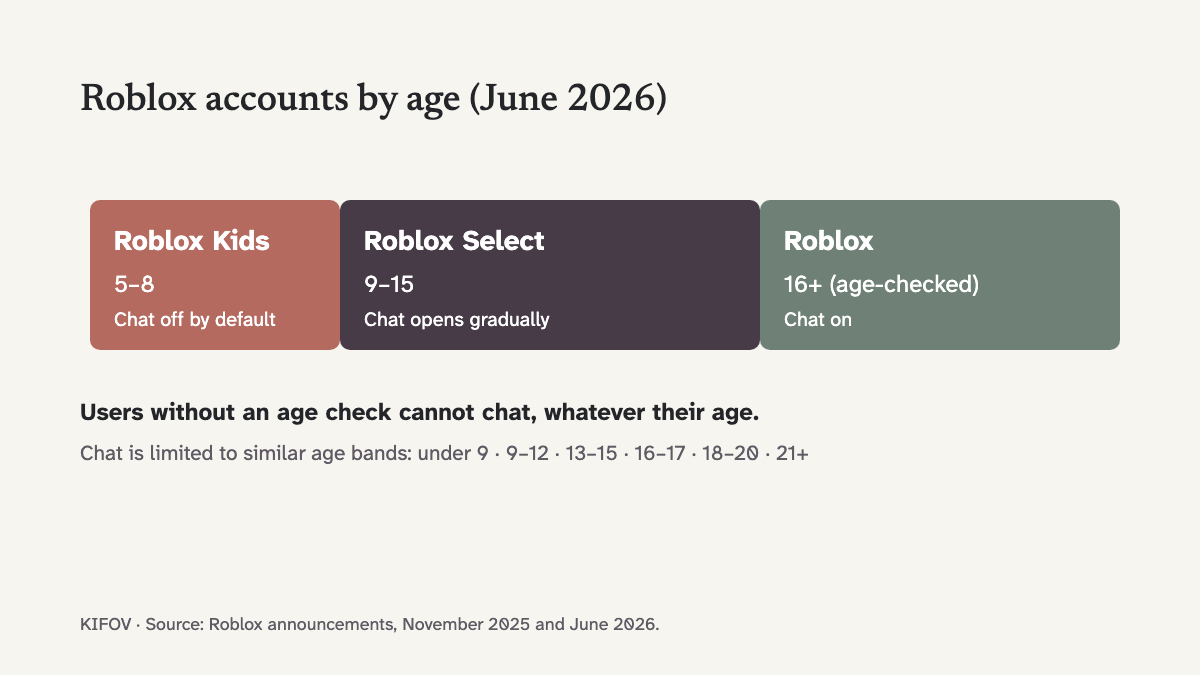
Roblox Kids, Roblox Select and age checks: a guide for parents
Roblox now decides who your child can chat with by age group, and switches chat off for anyone who has not completed an age check. What changed, what you control, and what to keep an eye on.
 Analysis
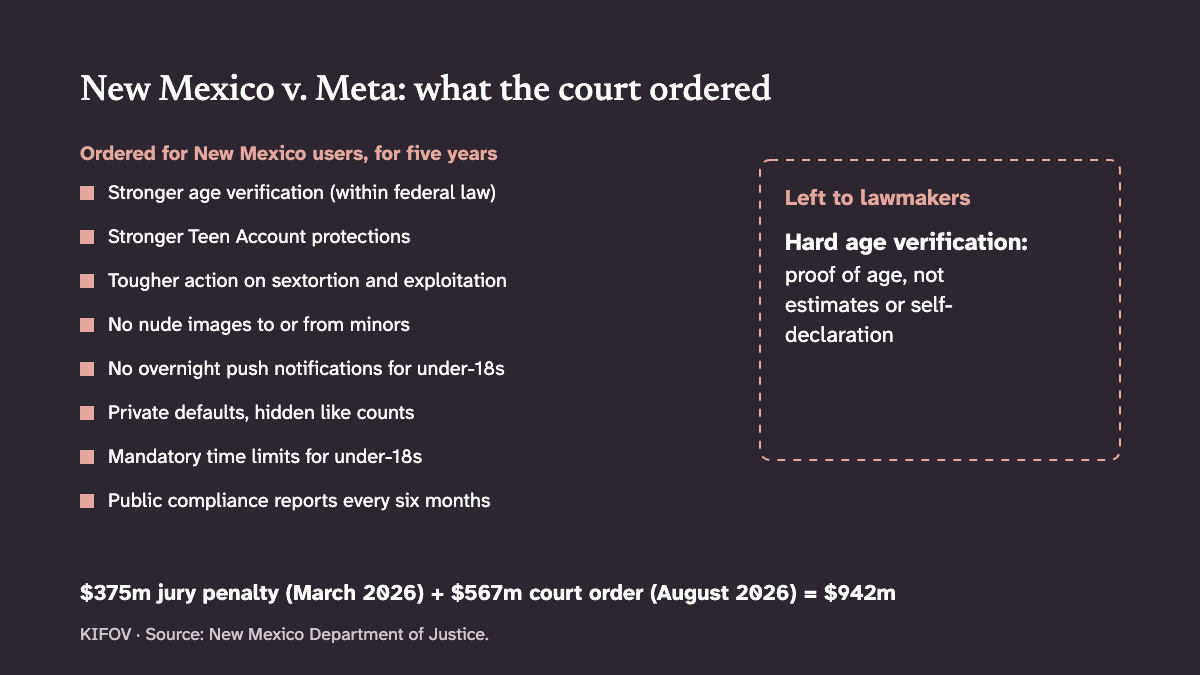
What a New Mexico court has ordered Meta to change for teenagers, and what it left out
The first court to hold a social media company liable for endangering children has set five years of supervised changes to Facebook and Instagram. The list is long; the gap in it is telling.
 News
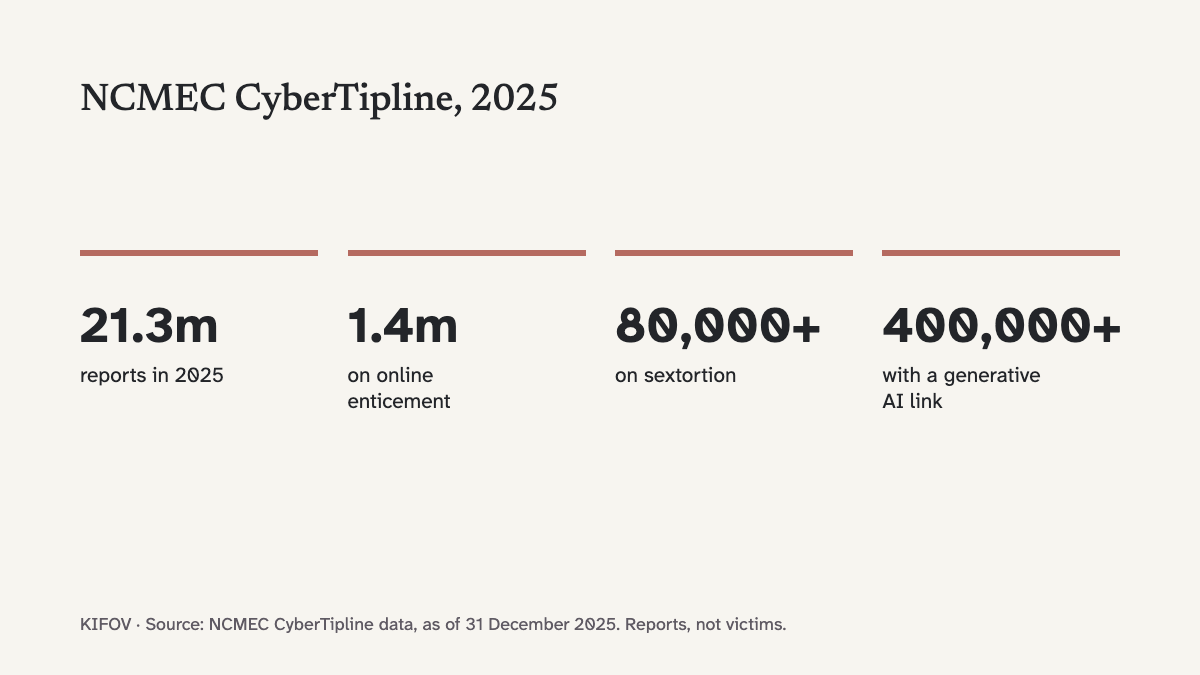
21.3 million reports in a year: what NCMEC’s 2025 CyberTipline data shows about risks to children
Reports of online enticement rose 158% and child sex trafficking reports 323%. The figures are a record of what was reported, which is not the same as a measure of how often children are harmed.
 News
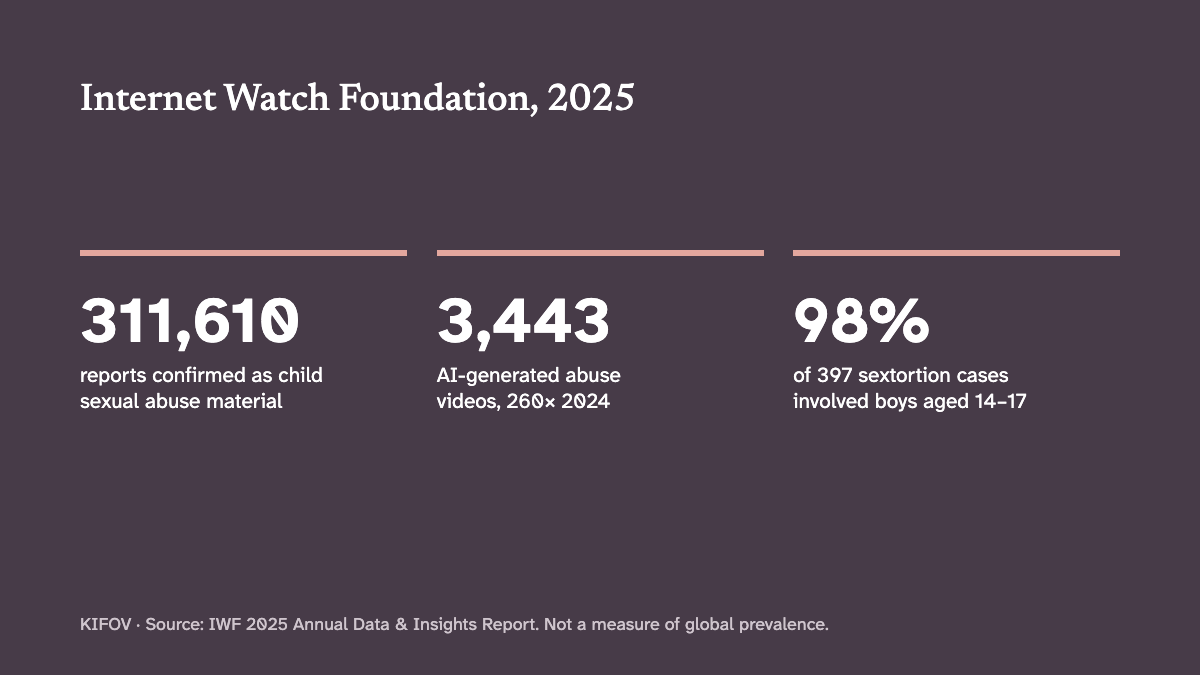
AI-generated abuse videos rose more than 260-fold in a year, the Internet Watch Foundation reports
The UK hotline confirmed 3,443 AI-generated child sexual abuse videos in 2025. Its data also shows sextortion cases more than doubling, almost all of them against teenage boys.
 Analysis
Australia’s under-16 social media minimum age: what the first months show
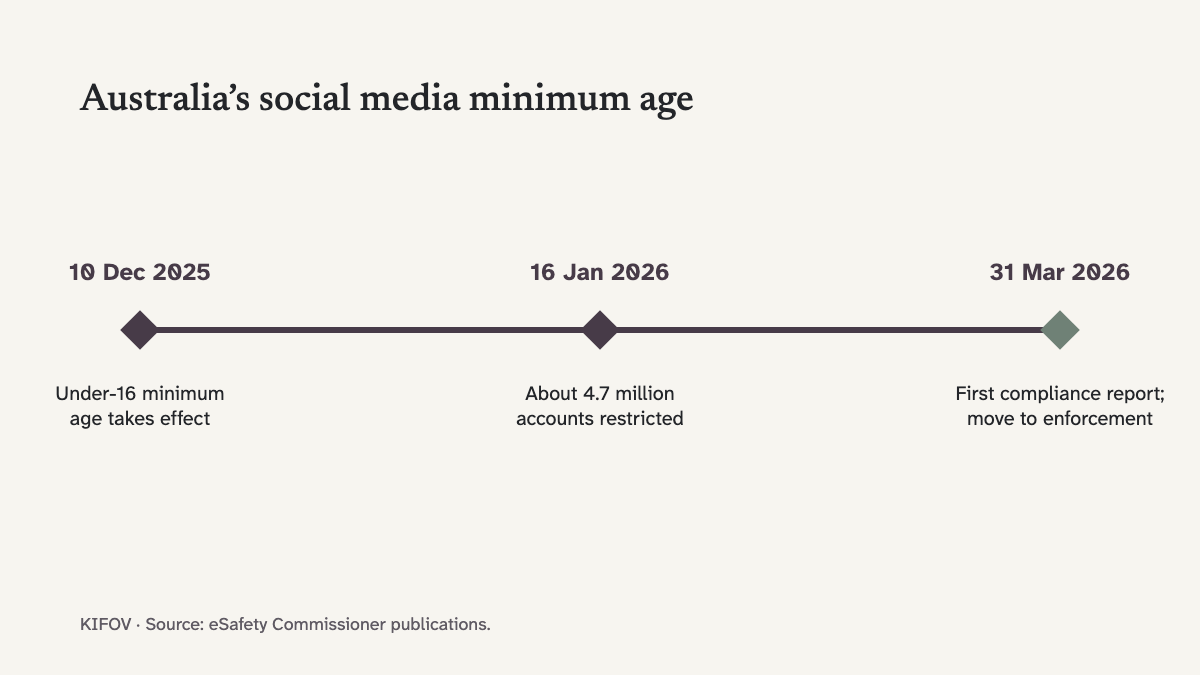
Platforms removed access to about 4.7 million accounts in the first weeks. By March, the regulator had moved to enforcement against five of the biggest services. The early lesson is about age assurance, not willpower.
 Guide
A child is being blackmailed with sexual images: what to do in the first hour
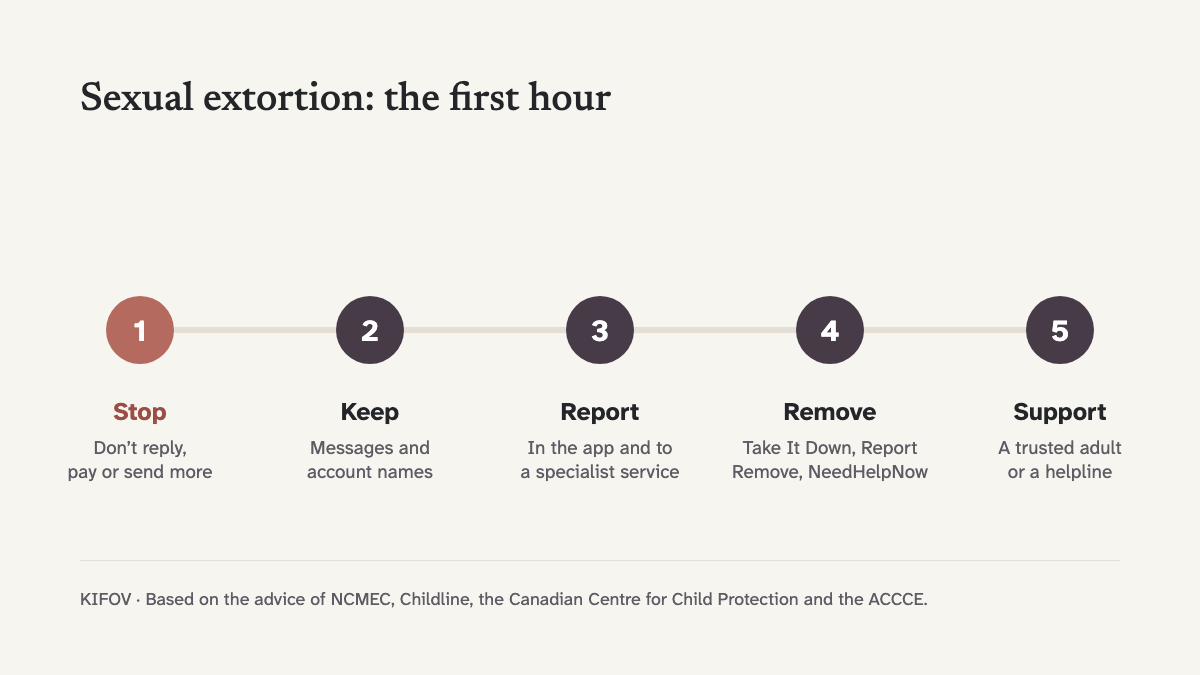
Stop, keep, report, remove, support. The advice of specialist services, in the order it matters, for the young person and for the adults around them.
 Guide
Reporting on harm to children online: a practical guide for journalists and editors
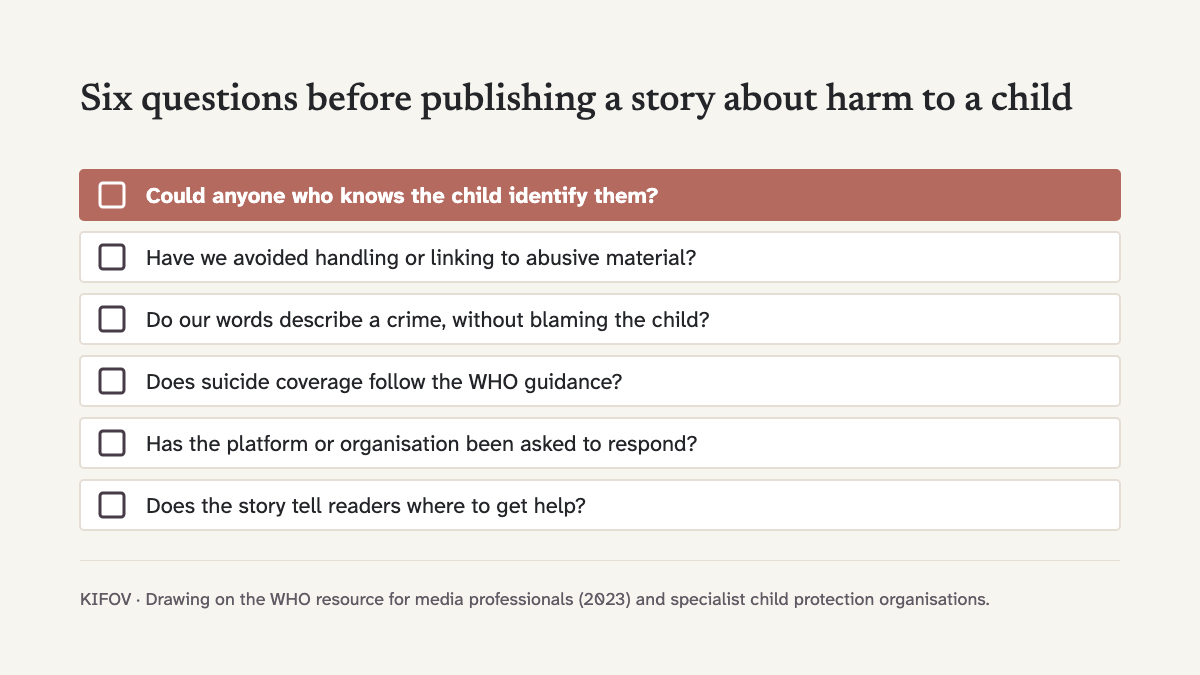
How to cover abuse, exploitation and self-harm involving children accurately and without adding to the harm, from terminology to the help box at the end.
 Explainer
Take It Down, Report Remove and NeedHelpNow: how services that remove young people’s images actually work
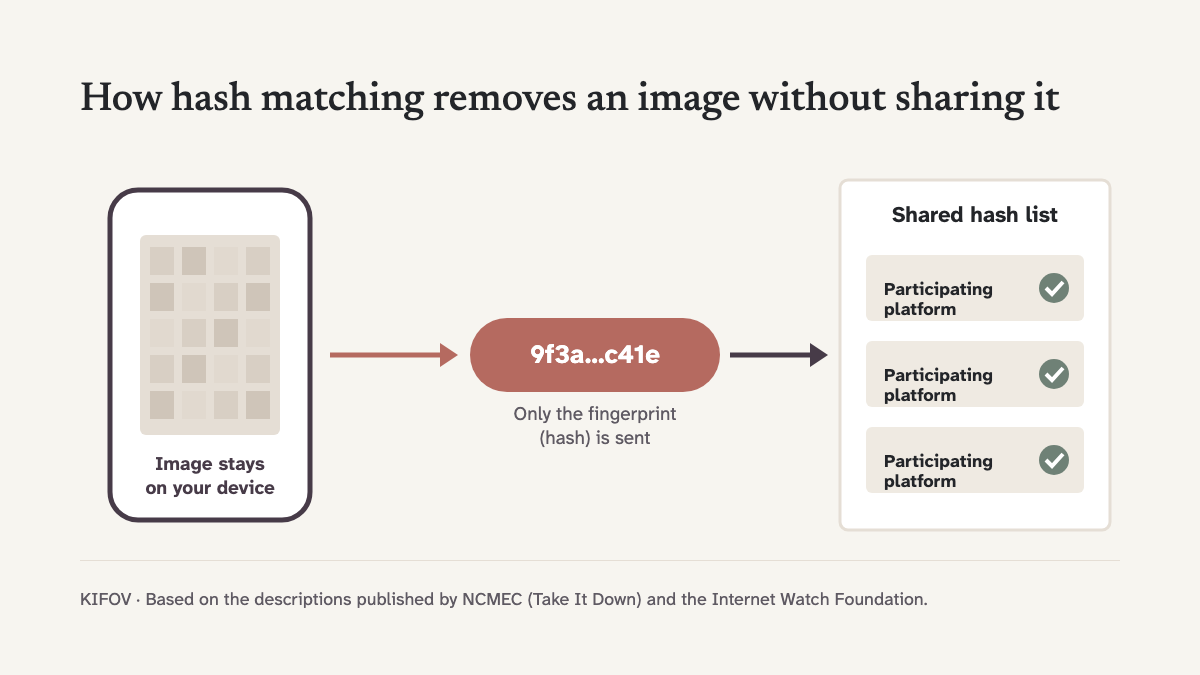
Hashing, hotlines and platform requests are three different mechanisms. Knowing which one you are using tells you what it can and cannot do.
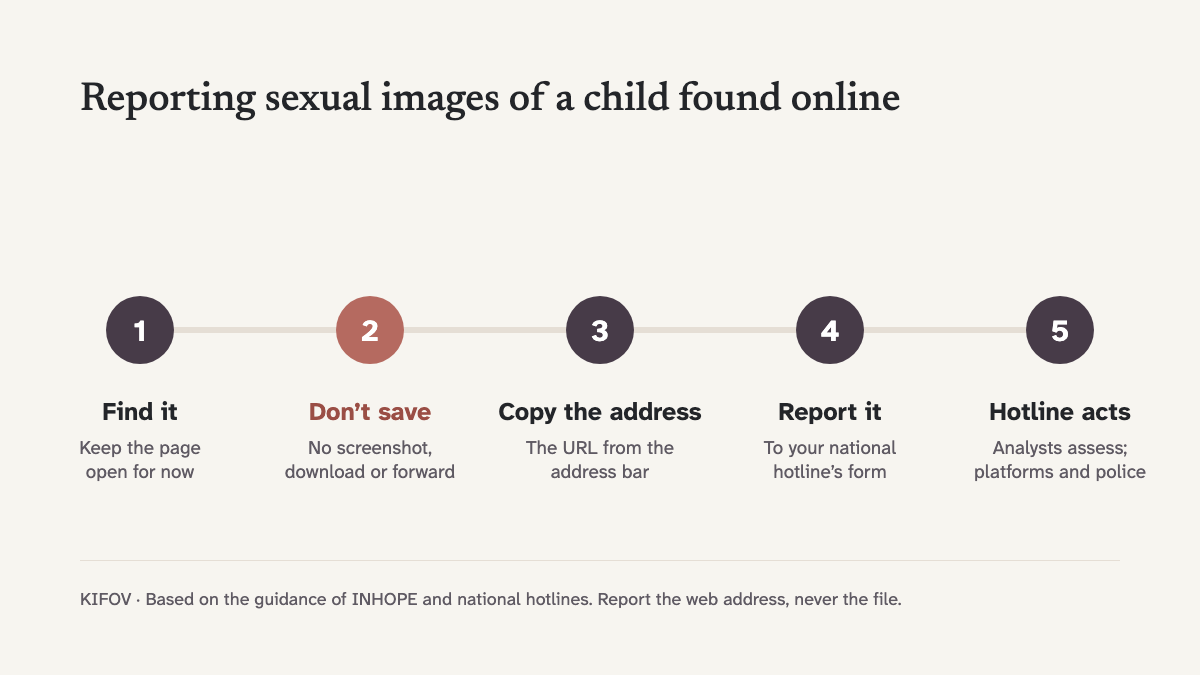 Guide
How to report sexual images of a child that you find online, without putting yourself or the child at risk
Report the web address, never the file. A step-by-step route to the hotline that can have it removed, for four countries and everywhere else.