
If a child is in danger now, or has hurt themselves, call your local emergency number. If you are a young person reading this and someone online is pressuring you, it is not your fault, and you can stop and tell someone today.
In September 2026, the FBI's Philadelphia field office issued a warning to parents about what it called a sharp increase in the activity of "764" and other violent online networks targeting children. It is one of several such warnings the FBI has issued. This guide summarises what the FBI says, and what parents and carers can do.
What these networks do
According to the FBI, these networks find children on the same public platforms most young people use: social media, gaming platforms and mobile apps. Members often begin by building a trusting or romantic relationship with a child. They then manipulate and coerce the child into increasingly harmful acts, designed to shame and isolate them: harming themselves, producing sexual images, harming animals or siblings. The FBI calls this "sadistic online exploitation".
Victims are typically aged 10 to 17, the FBI says, and some have been as young as nine. Many of those targeted are girls, but anyone can be. The FBI notes that offenders deliberately look for children who are already struggling, for example with depression or an eating disorder.
Warning signs
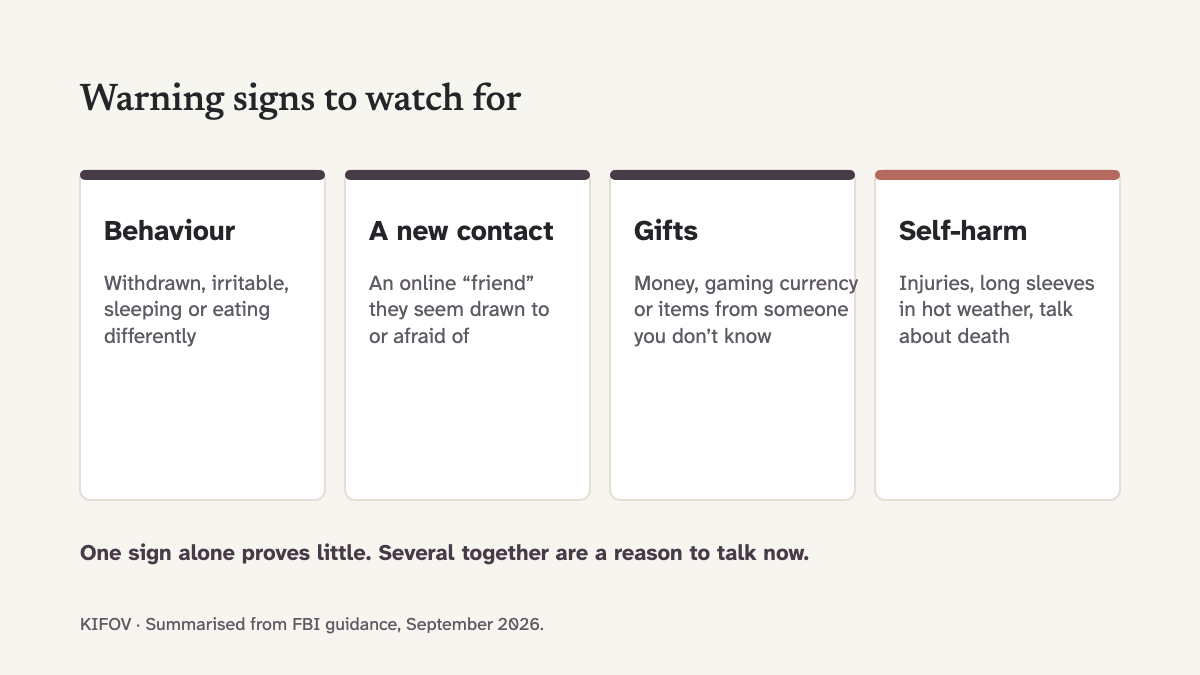
The FBI lists signs that family, friends and carers should watch for. We have grouped them:
Changes in behaviour. Becoming withdrawn, moody or irritable; dropping out of activities; changes in eating or sleeping; neglecting their appearance.
A new online relationship. A new online "friend" or group that the child seems infatuated with, or frightened of.
Unexplained gifts. Items delivered to the home, money, gaming currency or other virtual items from someone you do not know.
Signs of self-harm. Cuts, burns, bruises or scars, sometimes in patterns or forming words or symbols; wearing long sleeves in hot weather; talking about death or about not being wanted.
Other signs. Pets harmed or frightened; police called to the home under false pretences.
One sign on its own is rarely proof of anything. Several together, especially a new online contact plus a change in mood, are a reason to talk now.
How to talk to a child
- Start calmly and without blame. Something like: "I've noticed you seem worried lately. Whatever it is, you won't be in trouble. I want to help." These groups rely on shame and the threat of exposure to keep children silent; saying out loud that the child is not in trouble takes that power away.
- Believe them, and say clearly that it is not their fault.
- Do not confront the people involved online. That can put the child at greater risk and alert offenders to delete evidence.
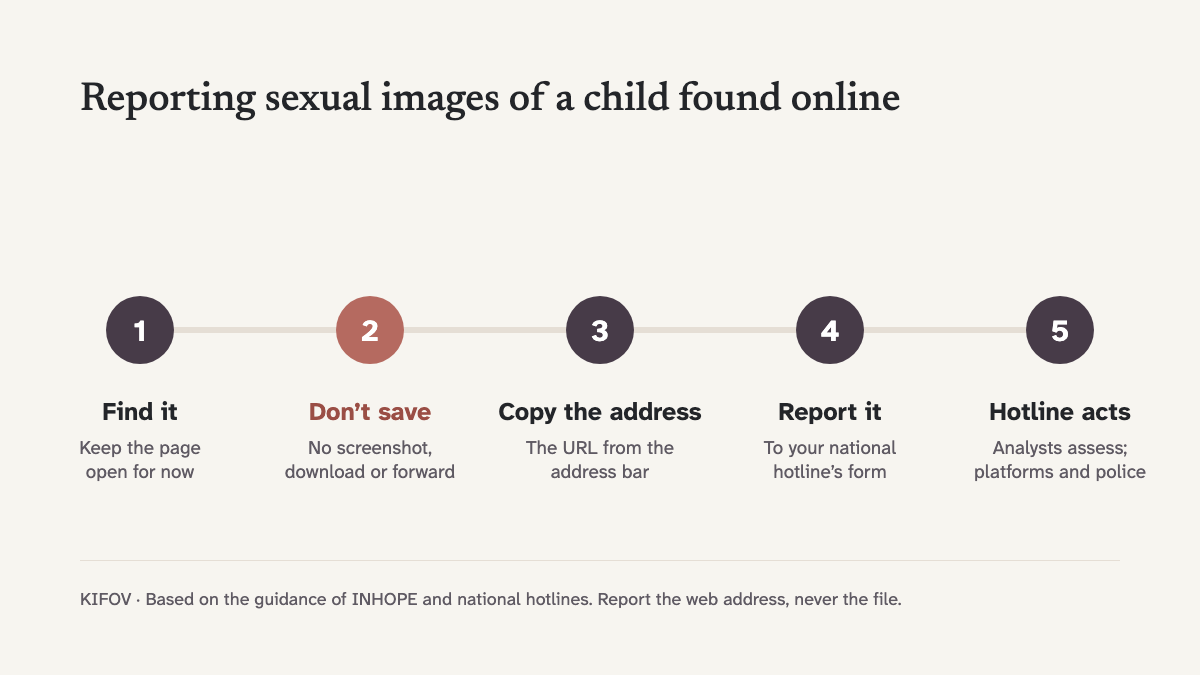
- Keep the messages. The FBI says texts, emails and other messages are crucial evidence. Do not forward or save any sexual images; report where they are instead.
- Get help for the child's wellbeing as well as the report. A child who has been coerced into self-harm needs care from a doctor or mental health professional, as well as an investigation.
How to report
- Immediate danger: call the emergency number.
- United States: the FBI tip line at 1-800-CALL-FBI or online at tips.fbi.gov, or a local FBI field office. You can also report to the NCMEC CyberTipline.
- Elsewhere: the police, and the specialist services on our Report a Concern page.
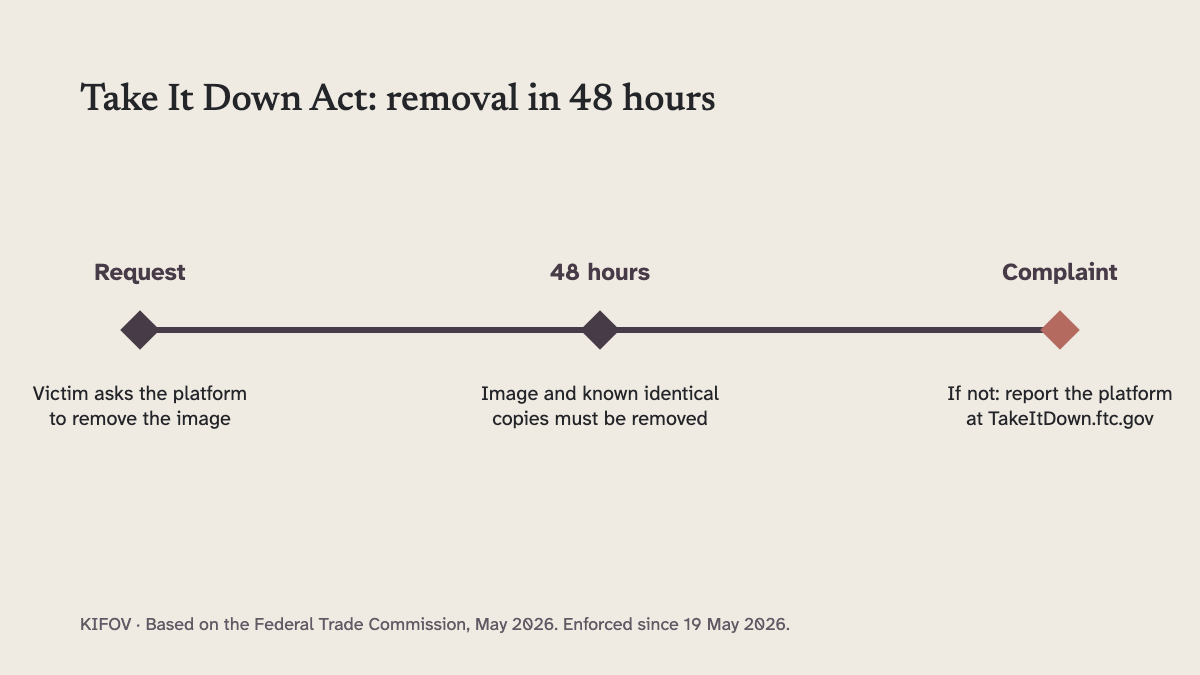
- Sexual images of the child online: Take It Down can help stop them spreading, without sending the images to anyone.
Support
If you are worried about a child's safety or mental health, a helpline can help you think through what to do. Young people can talk to a child helpline or crisis line in confidence. Find services for your country on our Get Help page.