
The Internet Watch Foundation (IWF), the UK's hotline for child sexual abuse material online, has published its data for 2025. Two findings stand out: a steep rise in realistic AI-generated videos of child sexual abuse, and a sharp increase in sexual extortion targeting teenage boys.
The key figures
| 2025 | IWF figure | Change on 2024 |
|---|---|---|
| Reports assessed | 451,210 | up 6% |
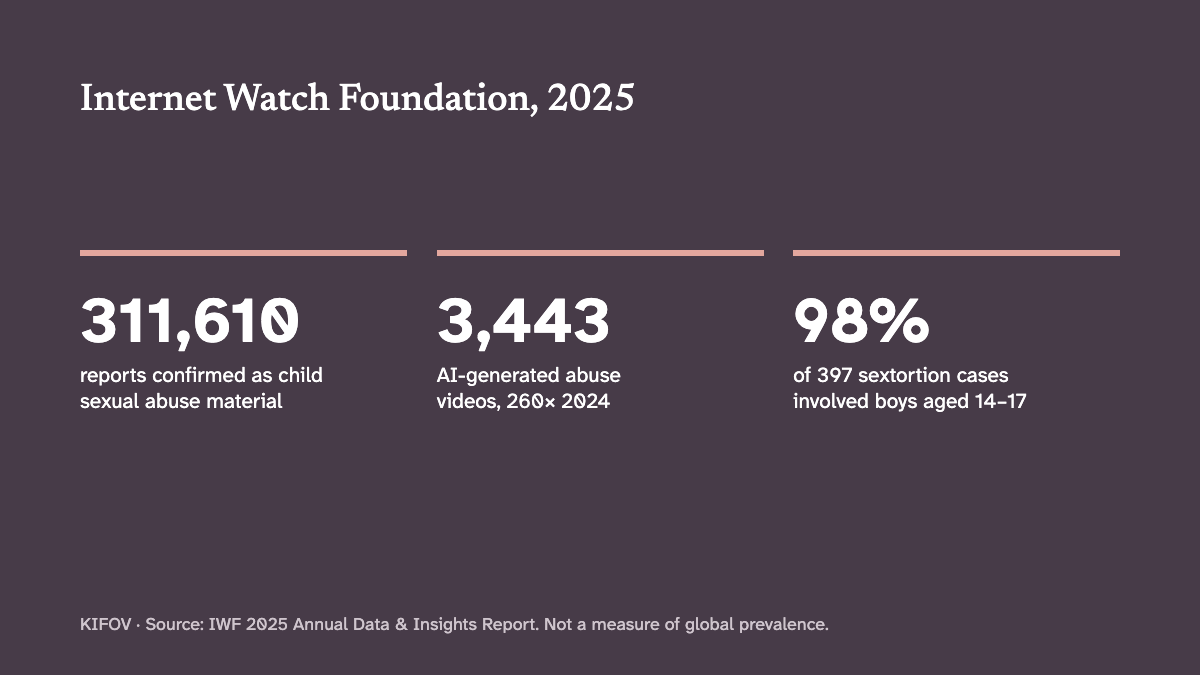
| Reports confirmed as child sexual abuse material | 311,610 | up 7% |
| Confirmed videos of child sexual abuse | 63,682 | up 50% |
| AI-generated child sexual abuse videos | 3,443 | more than 260 times the 2024 figure |
| Sexually coerced extortion cases | 397 | up 127% |
| Report Remove submissions from young people | 1,894 | up 66% |
The IWF says 311,610 confirmed reports equal one every 101 seconds.
AI-generated material is now mostly video, and mostly the most severe
According to the IWF, 65% of the AI-generated videos it confirmed fell into Category A, the most severe category under UK law, compared with 43% of videos involving real children. It also reports that 97% of AI-generated images depicted girls.
The IWF treats realistic AI-generated imagery as criminal material and accepts reports of it alongside photographs and videos. For hotlines, it also adds to the volume analysts must assess while they look for children who are being abused now.
Sextortion: almost entirely boys aged 14 to 17
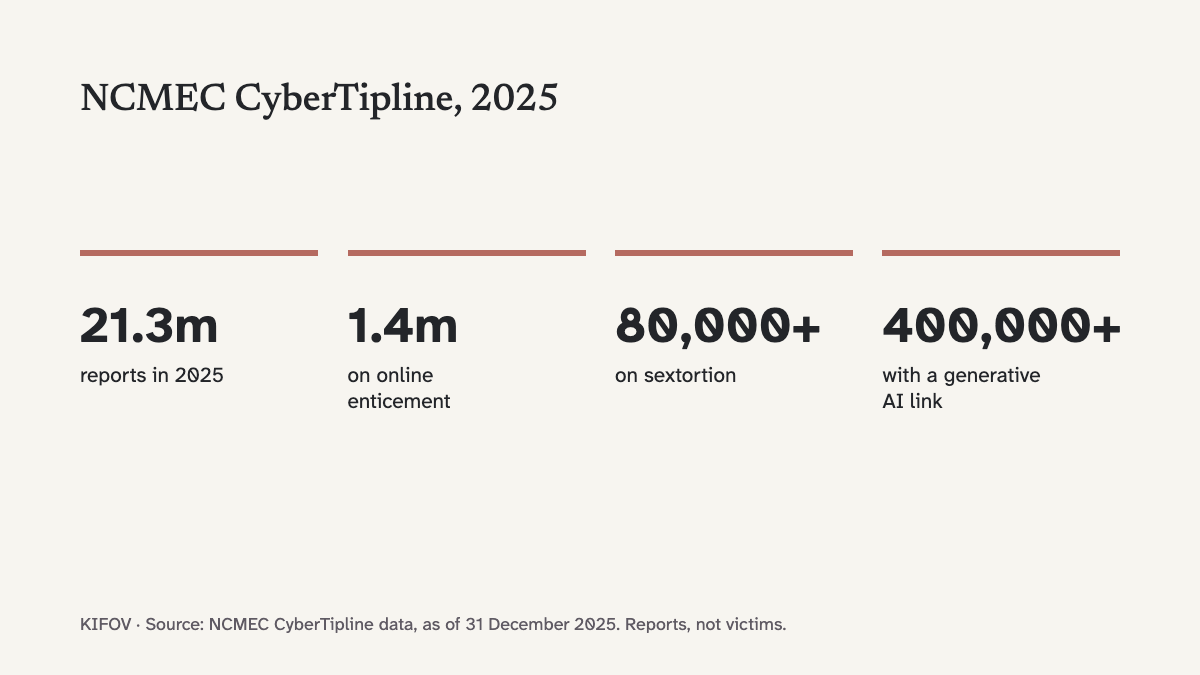
The IWF recorded 397 cases of sexually coerced extortion, more than twice the previous year. Of these, 98% involved boys aged 14 to 17. It is consistent with the United States, where NCMEC says teenage boys have been the most common targets of recent sextortion cases and describes offenders using fake accounts and pretending to be someone of the opposite sex.
More young people are using Report Remove
Report Remove, run with Childline, lets under-18s in the UK report sexual images of themselves for removal. Submissions rose 66% to 1,894, and 1,175 led to action. More young people knowing that this route exists, and using it, is one of the more hopeful numbers in the report.
Where the material is hosted
Of 310,437 web addresses the IWF actioned, 63% were hosted in EU member states. Bulgaria accounted for 28%, the United States 16% and the Netherlands 11%. Material hosted in the UK made up 951 addresses, 0.3% of the total.
How to read the data
The IWF is explicit that its figures come from its own operational work, including proactive searching, and "should not be interpreted as a measure of global prevalence". A rise can reflect more searching as well as more material.
What to do
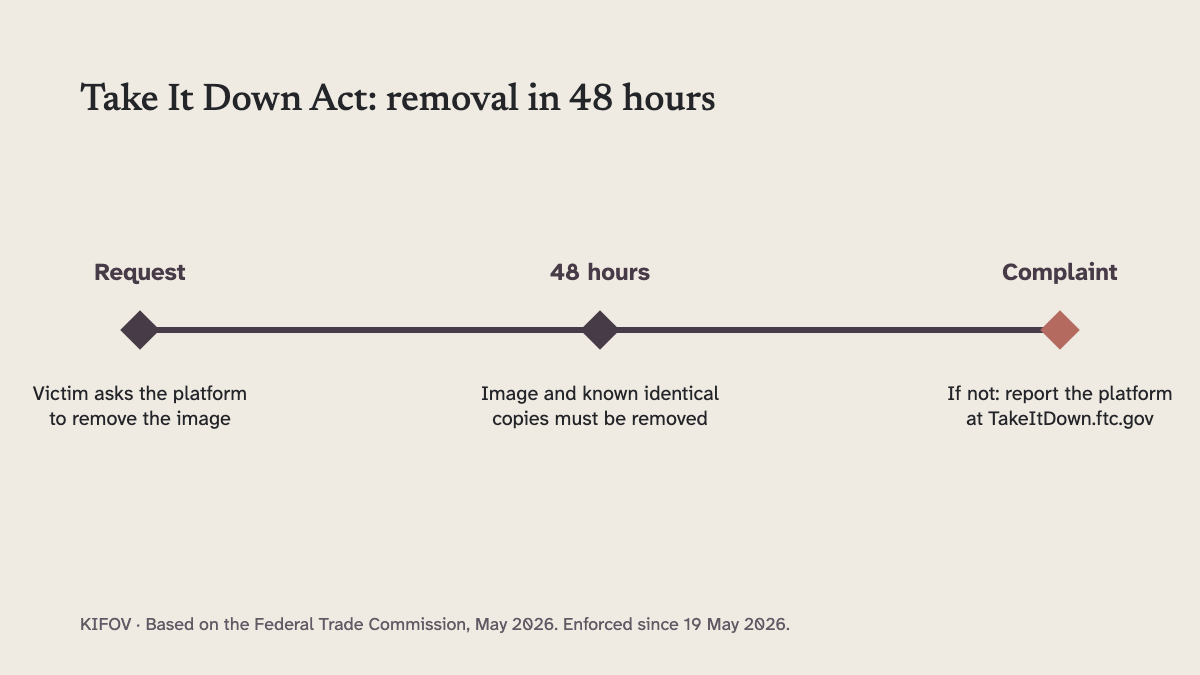
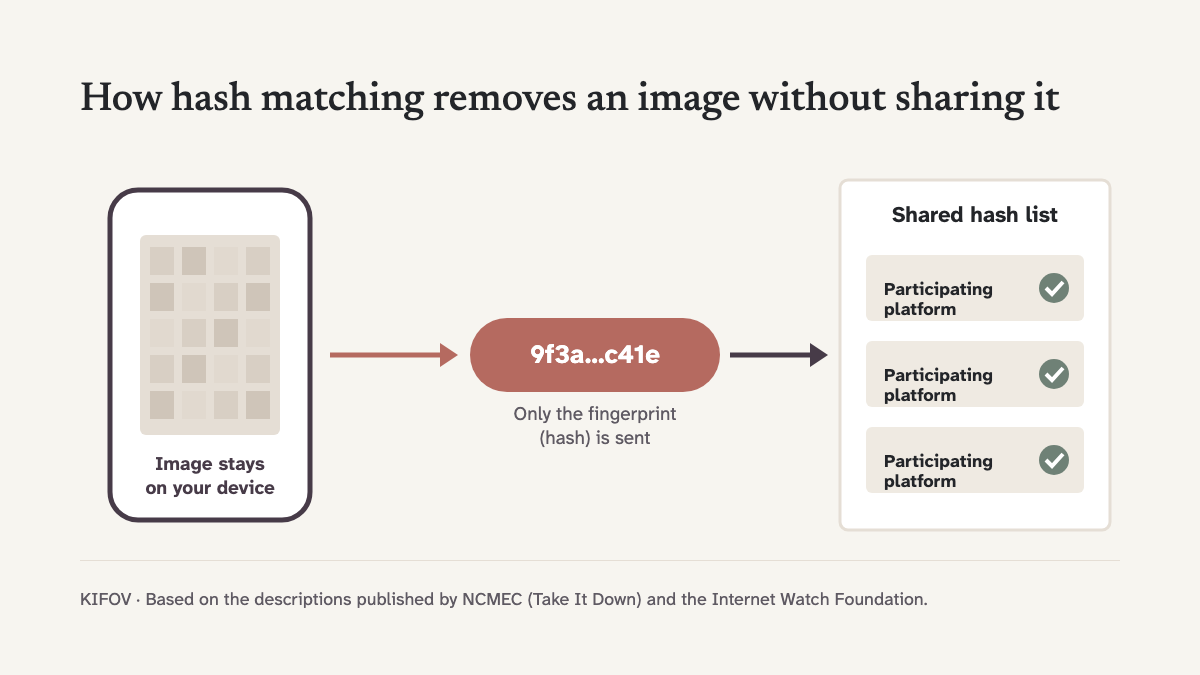
If you find sexual images of a child online, report the web address to a hotline and do not save or share the material: see how to report safely. If a teenager is being blackmailed, see the first-hour guide. Young people in the UK can use Report Remove.