
When a sexual image of a young person is shared online, or someone threatens to share it, the first question is usually how to make it disappear. Several services now exist to help, and they are often mentioned together. But they work in different ways, and the differences matter: they decide whether you have to send the image to anyone, which platforms are covered, and what the service cannot reach.
This explainer covers three services aimed at young people: Take It Down, Report Remove and NeedHelpNow.ca. Everything below is taken from what each service says about itself, checked on 30 October 2026.
Three mechanisms, not one
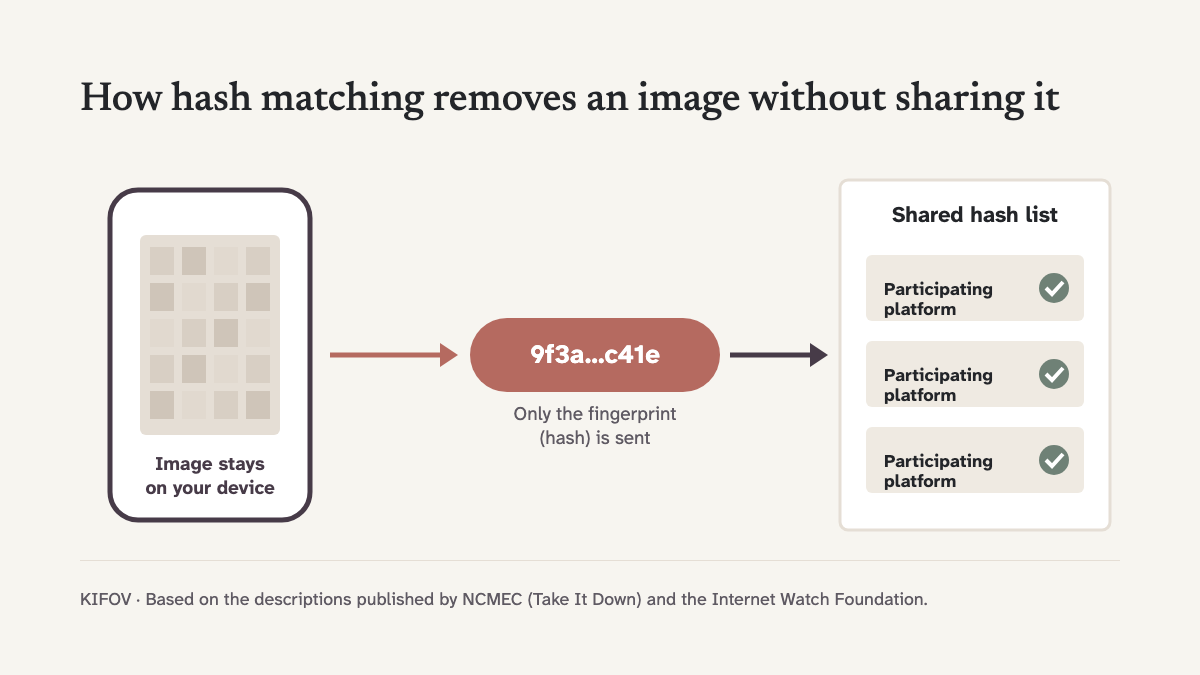
1. Hash matching (Take It Down). A "hash" is a short code calculated from an image, like a fingerprint. The same image always produces the same code, but the code cannot be turned back into the image. Take It Down, run by NCMEC, calculates the hash on your own device. Only the code is sent to NCMEC, which keeps it on a secure list shared only with participating platforms. They scan their public or unencrypted services for it and remove matching content. The image itself never leaves your phone or computer, and you can stay anonymous.
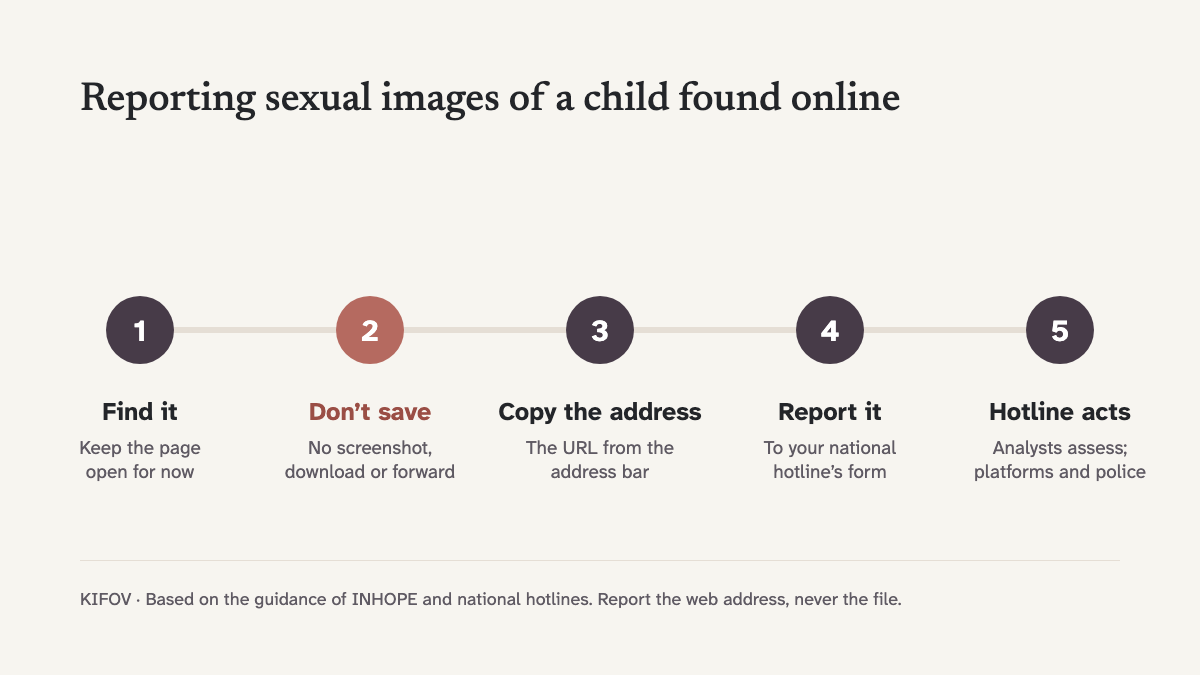
2. Hotline removal (Report Remove). In the UK, Report Remove lets under-18s report a sexual image or video of themselves to the Internet Watch Foundation (IWF), through a Childline account. The IWF is a hotline: its analysts assess the report and work to have the image removed wherever it is publicly available online.
3. Guided platform requests (NeedHelpNow.ca). NeedHelpNow.ca, run by the Canadian Centre for Child Protection, explains step by step how to ask each major platform to remove an image (which options to select, what to write) and points young people to Cybertip.ca and to support.
Side by side
| Take It Down | Report Remove | NeedHelpNow.ca | |
|---|---|---|---|
| Run by | NCMEC (United States) | Childline (NSPCC) and IWF (UK) | Canadian Centre for Child Protection |
| For | Images taken before you were 18 | Under 18s in the UK | Young people, especially in Canada |
| Do you send the image? | No, only its fingerprint | You report it to the IWF through Childline | No; you make requests to platforms yourself |
| Anonymous? | Yes | A Childline account is needed so the service can update you | Yes, it is an information site |
| Extra support | Information and links | Optional Childline counsellor | Support team and links to Kids Help Phone |
What none of them can do
- Encrypted messages and private devices. The IWF says it cannot remove images on encrypted networks such as WhatsApp, or saved on a person's phone or computer. Take It Down works on public or unencrypted platforms that have agreed to take part.
- Every platform. Hash matching only works on services that use the shared list. A site that does not take part will not see the fingerprint.
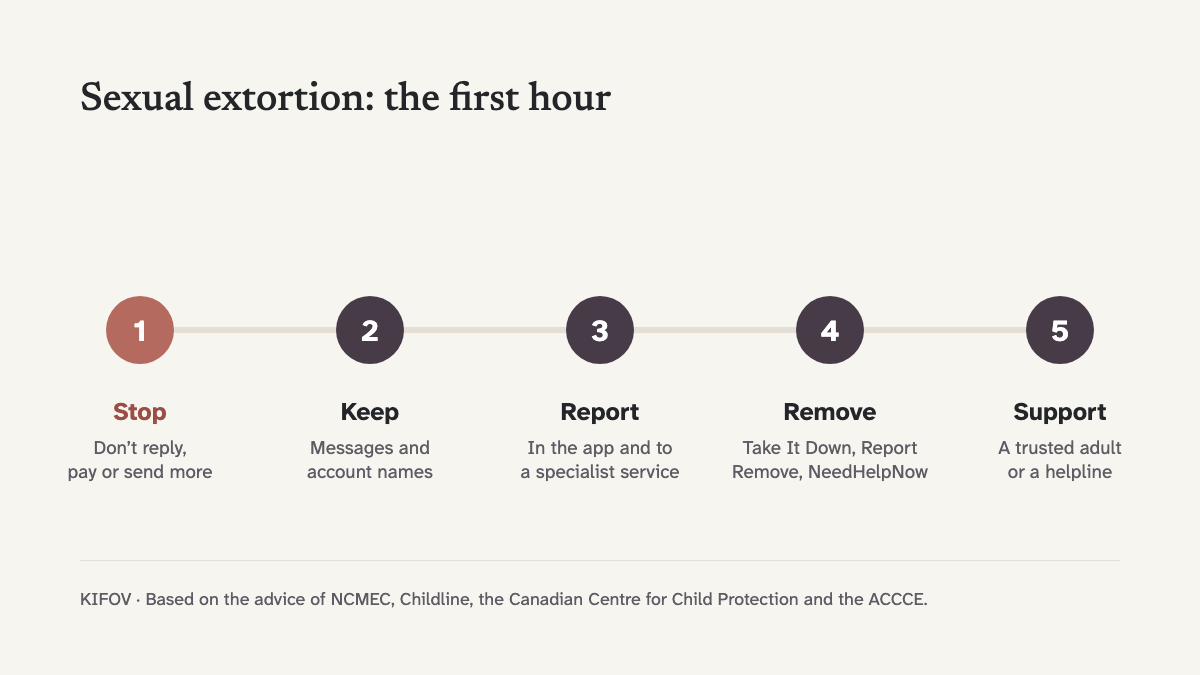
- Stopping the person. Removing an image does not stop someone who is blackmailing a young person. That is why reporting the account and contacting the police or a specialist service, as set out in our first-hour guide, still matter.
Over 18?
Take It Down is for images taken before the person was 18. For intimate images of adults, the Take It Down site points to StopNCII.org, which uses the same hashing approach.
How far removal reaches
Removal services are one of the clearest improvements in child protection online in recent years, because they put the young person in control and do not ask them to send the image to anyone. But they are only as wide as the platforms that take part. Which platforms participate, and how quickly they act on a match, is the kind of question our planned Platform Safety Observatory is designed to examine.