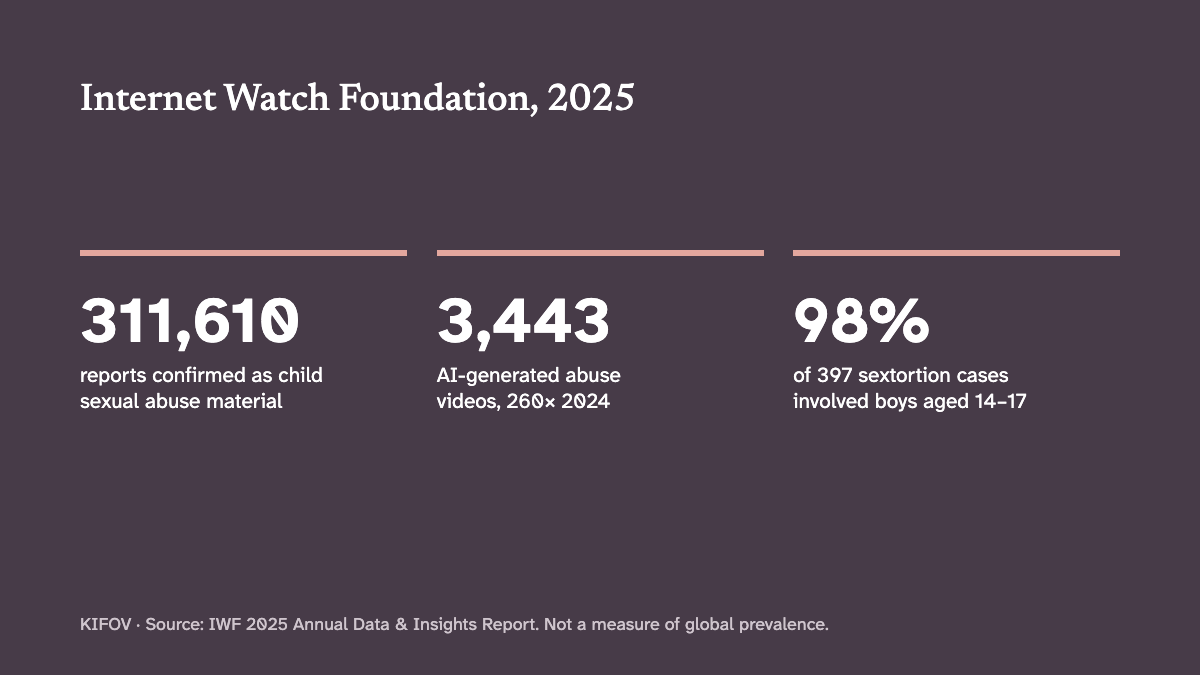

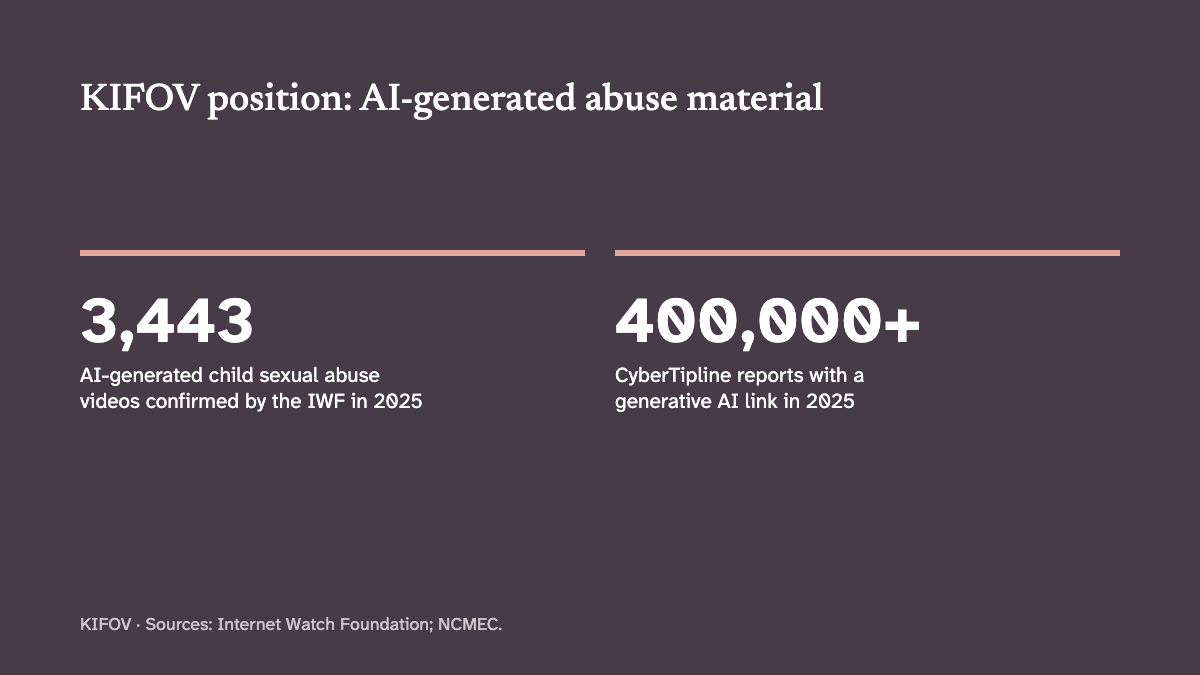
In 2025, the Internet Watch Foundation confirmed 3,443 AI-generated videos of child sexual abuse, more than 260 times the number it found the year before. The US CyberTipline received more than 400,000 reports with a link to generative AI. These are not experiments at the edge of the internet. They are a growing share of the material that hotlines, police and platforms must deal with every day.
KIFOV's position is this.
AI-generated abuse material is abuse material
A realistic sexual image of a child is harmful whether a camera or a model produced it. NCMEC reports that more than 182,000 CyberTipline reports in 2025 involved offenders possessing, generating or trying to generate such material, and the IWF found that 65% of the AI-generated videos it confirmed were in the most severe category under UK law. Every such image that analysts have to assess also takes time away from finding children who are being abused now. The IWF already treats realistic AI-generated imagery as criminal material and accepts reports of it. Laws and platform rules everywhere should leave no doubt that the same applies.
Safety has to be built into the tools
Companies that build or host image and video generation tools should be able to show, not only state, that their systems refuse to produce sexual content involving children, that they detect attempts to get around those refusals, and that they report what they find to the authorities. Testing for this before release should be routine, documented and open to independent review.
Reporting should be simple and safe
Anyone who comes across AI-generated sexual images of a child should report the web address to their national hotline, exactly as they would for any other abuse material, and should never download, save or share it. Our guide to reporting safely explains how.
What KIFOV will do
We will track and publish what courts, regulators and AI companies do about this material, using primary sources, in our accountability tracker. We will report the data hotlines publish, with its limits. And we will hold companies to the commitments they make.
KIFOV Editorial Team, 30 October 2026