
Two things in the United States share almost the same name, and the difference matters to anyone trying to get an image taken down.
- Take It Down is a free service run by NCMEC since before the law. It lets people remove nude or sexual images taken of them before they were 18, by sending a digital fingerprint of the image, not the image itself, to participating platforms.
- The TAKE IT DOWN Act is a federal law. Its removal requirements became enforceable on 19 May 2026, when the Federal Trade Commission (FTC) began enforcing them.
They work together, and a young person may use both.
What the law requires of platforms
According to the FTC, covered platforms must:
- Offer a way to request removal of intimate photos or videos shared without the person's consent.
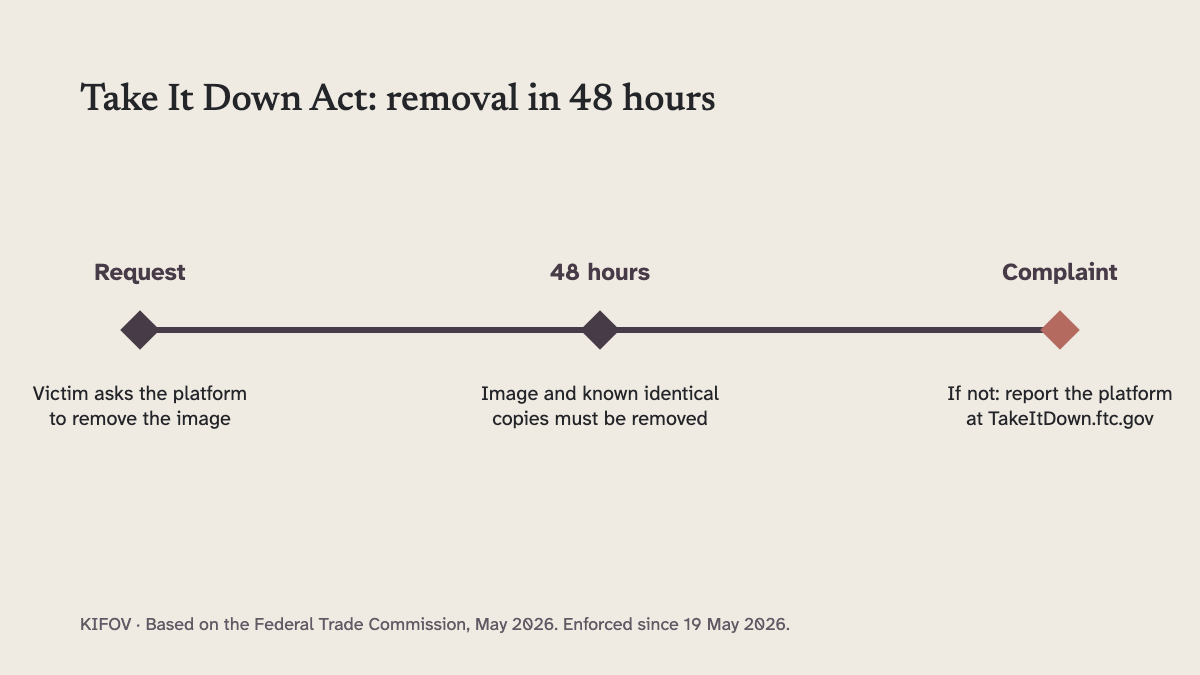
- Remove the image within 48 hours of a valid request.
- Remove known identical copies as well, so the person does not have to report every copy.
The law covers real photos and videos and, in the FTC's words, "digital forgeries": images created or altered using software, an app or artificial intelligence. The FTC lists social media, messaging, image and video sharing and gaming platforms among the services it can cover.
How to use it
- Find the platform's removal process for non-consensual intimate images. Under the law, every covered platform must have one.
- Make the request. Platforms may ask you to identify the image and confirm that it was shared without consent.
- Keep a record of when you made the request.
- If the image has not been removed after 48 hours, or the platform has no removal process, you can complain to the FTC at TakeItDown.ftc.gov.
If the person in the image is under 18
The law's removal process applies, but it should not be the only step.
- Report to the CyberTipline (online or 1-800-843-5678). Sexual images of a child are child sexual abuse material, which is a crime to possess or share, and NCMEC works with law enforcement.
- Use NCMEC's Take It Down service to stop the image spreading on participating platforms, without sending it to anyone.
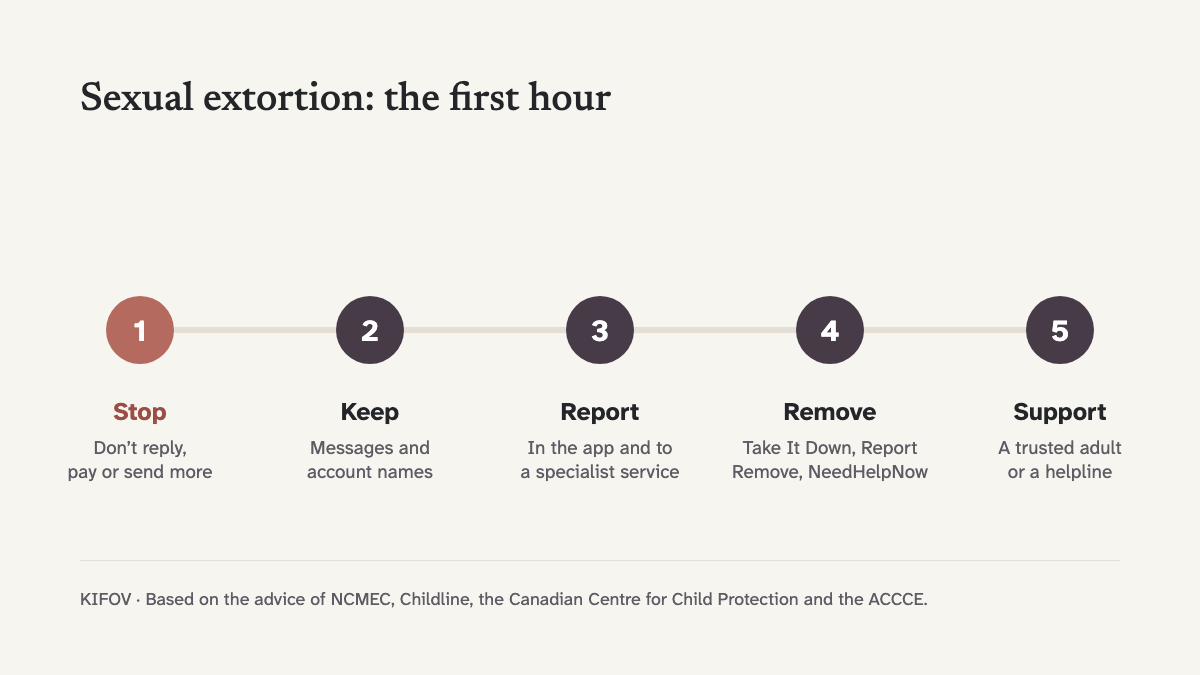
- If someone is threatening to share the image, do not pay and keep the messages. See our first-hour guide.
Never send the image to anyone as "proof", including to a platform's support staff by email, a school or KIFOV.
What it does not do
- It does not cover encrypted messages that a platform cannot see, or images saved on someone's device.
- It does not punish the person who shared the image; that is a matter for criminal law and the police.
- It applies to platforms within reach of US law. For services elsewhere, use the reporting routes on our Report a Concern page.