Get Help Report a Concern
Research

KIFOV Briefing, October 2026: children’s safety online, where things stand

A compact reference for journalists, policymakers and professionals: the latest data on harm to children online, what courts and regulators now require of platforms, and verified routes to help.

  • Fact-checked
  • 6 primary sources
  • AU · CA · GB · IE · NZ · US
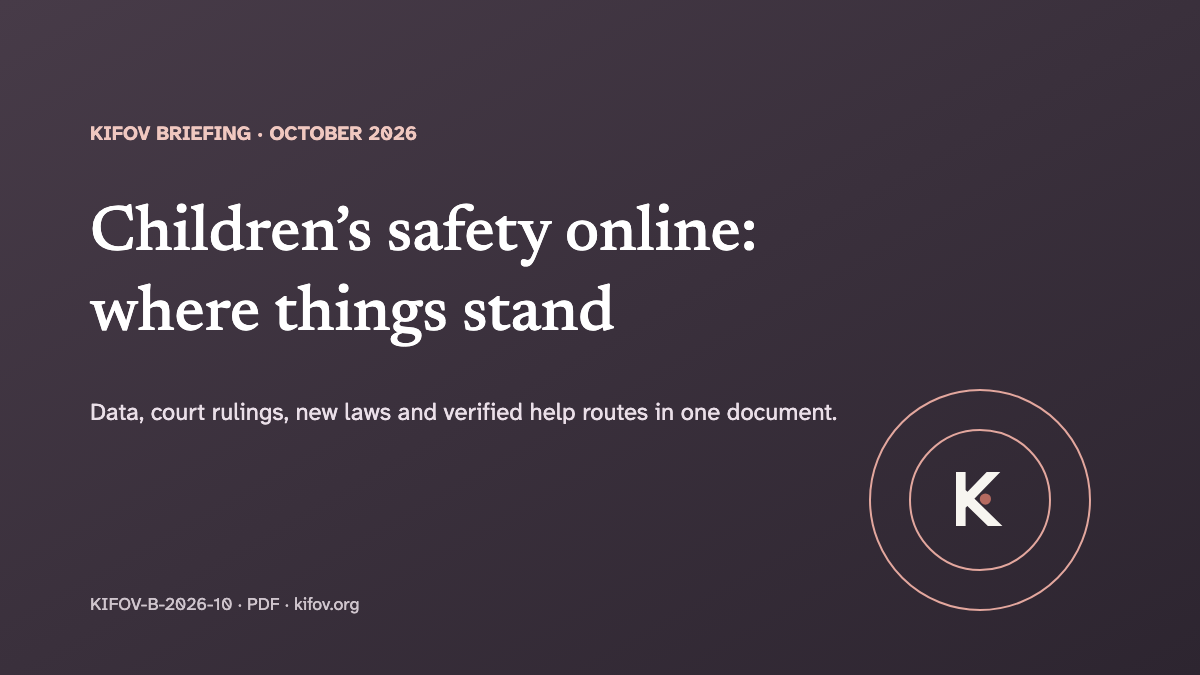
The cover of the KIFOV Briefing for October 2026, plum with the KIFOV wordmark and charter emblem.
KIFOV Briefing, October 2026. Download the full PDF below.
In this article
  1. What is in the briefing
  2. Who it is for
  3. How to cite
  4. Sources

The October 2026 KIFOV Briefing brings together, in one document, the figures and decisions that anyone working on children's safety online is likely to need this autumn. It is written to be quoted: every figure carries its source, and the full version is available as a PDF.

What is in the briefing

The scale of harm. The US CyberTipline received 21.3 million reports in 2025, including 1.4 million about online enticement and an average of 137 reports of financial sextortion a day. The Internet Watch Foundation confirmed 3,443 AI-generated child sexual abuse videos in 2025, more than 260 times the previous year, and found that 98% of the sextortion cases it handled involved boys aged 14 to 17.

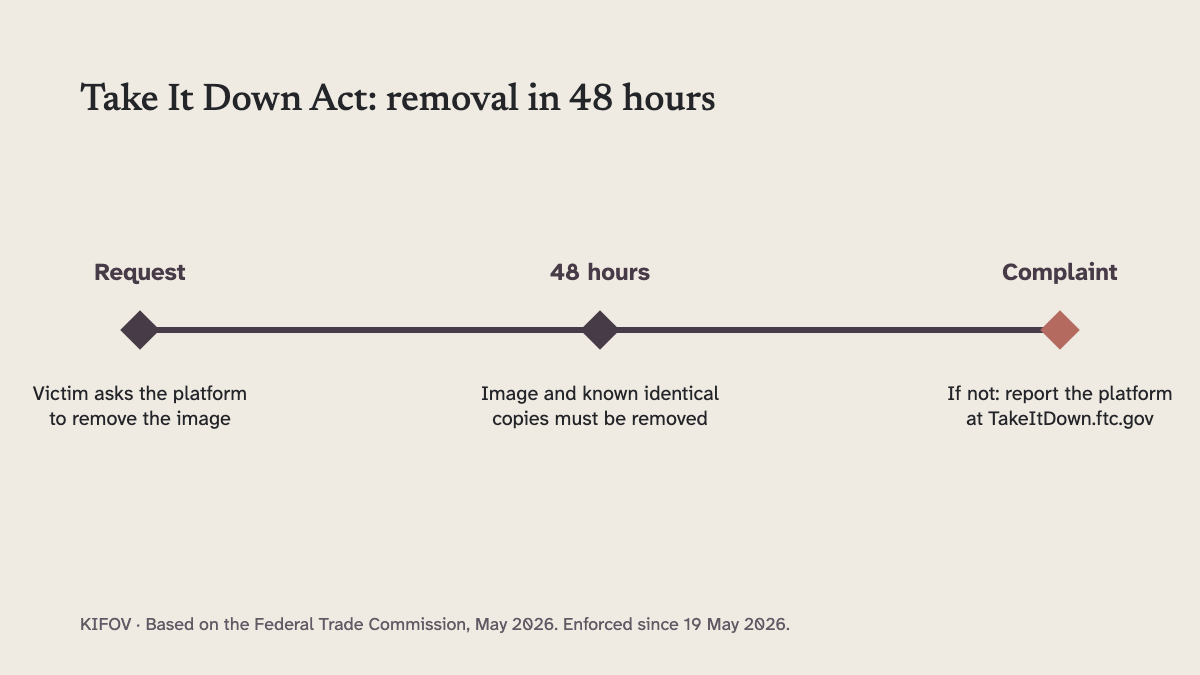
What platforms must now do. A New Mexico court has ordered five years of supervised changes to Facebook and Instagram for under-18s, after a total of $942 million in penalties. In the United States, platforms must remove reported intimate images within 48 hours under the Take It Down Act, enforced since 19 May 2026. Australia's regulator moved to enforcement in March 2026 against five large platforms over its under-16 minimum age. Roblox now requires an age check before any chat.

Where to get help. A table of verified services in Australia, Canada, Ireland, New Zealand, the United Kingdom and the United States, plus international directories, each with the date of its last check.

Who it is for

Journalists who need a sourced summary on deadline; policy and regulatory staff comparing approaches across countries; teachers, social workers and trust and safety teams who need the reporting routes in one place.

How to cite

KIFOV (2026). KIFOV Briefing, October 2026: children's safety online, where things stand. KIFOV-B-2026-10, version 1.0. https://kifov.org/research/kifov-briefing-october-2026/
How we made this

The briefing compiles figures and decisions from primary documents only: the publications of NCMEC, the Internet Watch Foundation, the New Mexico Department of Justice, the US Federal Trade Commission, Australia's eSafety Commissioner and Roblox. Each document was opened and checked on 30 October 2026. Figures are quoted as the source states them, with its own caveats. Help services were checked one by one on their official websites. KIFOV's own analysis of each development is published separately and linked from the online tracker.

Limitations

Hotline figures count reports received, not children harmed; they rise with better detection as well as with more abuse. Company announcements describe what a company says it has done, not independently measured effects. The help table covers six countries; for others, it points to international directories.

Download the report (PDF)

About this piece

Type
Research
Evidence
Primary evidence
Sources
6, 6 primary
Countries
Australia, Canada, United Kingdom, Ireland, New Zealand, United States

Sources

  1. CyberTipline Data National Center for Missing & Exploited Childrenaccessed 30 Oct 2026
  2. 2025 Annual Data & Insights Report: Executive summary Internet Watch Foundationaccessed 30 Oct 2026
  3. Court Orders Meta to Pay $942 Million and Overhaul Protections for Children on Facebook and Instagram (7 August 2026) New Mexico Department of Justiceaccessed 30 Oct 2026
  4. FTC Begins Enforcing the TAKE IT DOWN Act (19 May 2026) Federal Trade Commissionaccessed 30 Oct 2026
  5. Social Media Minimum Age compliance report (31 March 2026) eSafety Commissioneraccessed 30 Oct 2026
  6. Age-Based Roblox Kids and Roblox Select Accounts Now Globally Available (16 June 2026) Robloxaccessed 30 Oct 2026

Updates and corrections

None since publication. Spotted an error, or named in this piece? Contact the editors; we record every substantive change here (corrections policy).