
Sexual extortion, often called sextortion, is blackmail using sexual images. Someone obtains, or claims to have, a nude or sexual image of a young person, then threatens to share it with their friends, family or followers unless they send more images or pay money.
The National Center for Missing & Exploited Children (NCMEC) in the United States describes a dramatic increase in sextortion cases reported to its CyberTipline, especially financial sextortion, where the offender demands money. It says teenage boys have been the most common targets in recent cases. The Canadian Centre for Child Protection says its tipline, Cybertip.ca, receives an average of six sextortion reports a day. In many cases, NCMEC notes, the blackmailer is using a fake account and images stolen from someone else.
What follows is the advice of the specialist services that deal with these cases, arranged in the order it matters most. It is written for the young person and for the adult they have told.
If you are the young person
This is not your fault. Even if you sent a photo you now regret, the person blackmailing you is committing a crime. You can get out of this, and people deal with it every day.
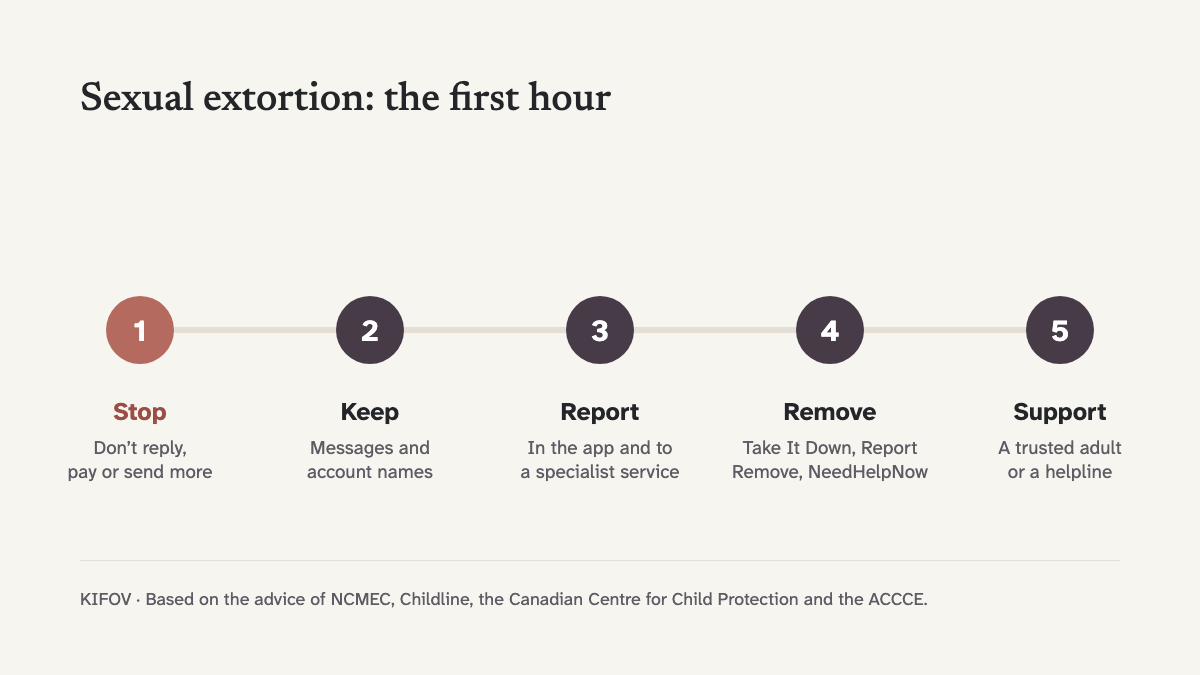
- Stop replying. Do not pay, and do not send anything more. NCMEC's advice is that cooperating or paying rarely stops the blackmail. People who pay are often asked for more.
- Keep everything. Do not delete your account or the conversation yet. Take screenshots of the messages and the account name (not of any sexual image). This is evidence that can stop them.
- Block and report the account in the app, using the option for threats or sharing intimate images.
- Tell an adult you trust, or contact a child helpline. You do not have to deal with this alone. Find a helpline.
- Get the images taken down. See the section on removal below.
If you are thinking about hurting yourself because of this, please talk to someone right now. Call a crisis line or a child helpline, or the emergency number if you are in danger. Blackmailers rely on panic and shame. Both pass, and there is a way through this.
If you are the adult they told
The first minutes of your reaction shape whether the young person keeps talking to you.
- Stay calm, and thank them for telling you. Say clearly that it is not their fault and that you will deal with it together. Do not take their phone away as a punishment.
- Do not pay, and do not contact the blackmailer yourself.
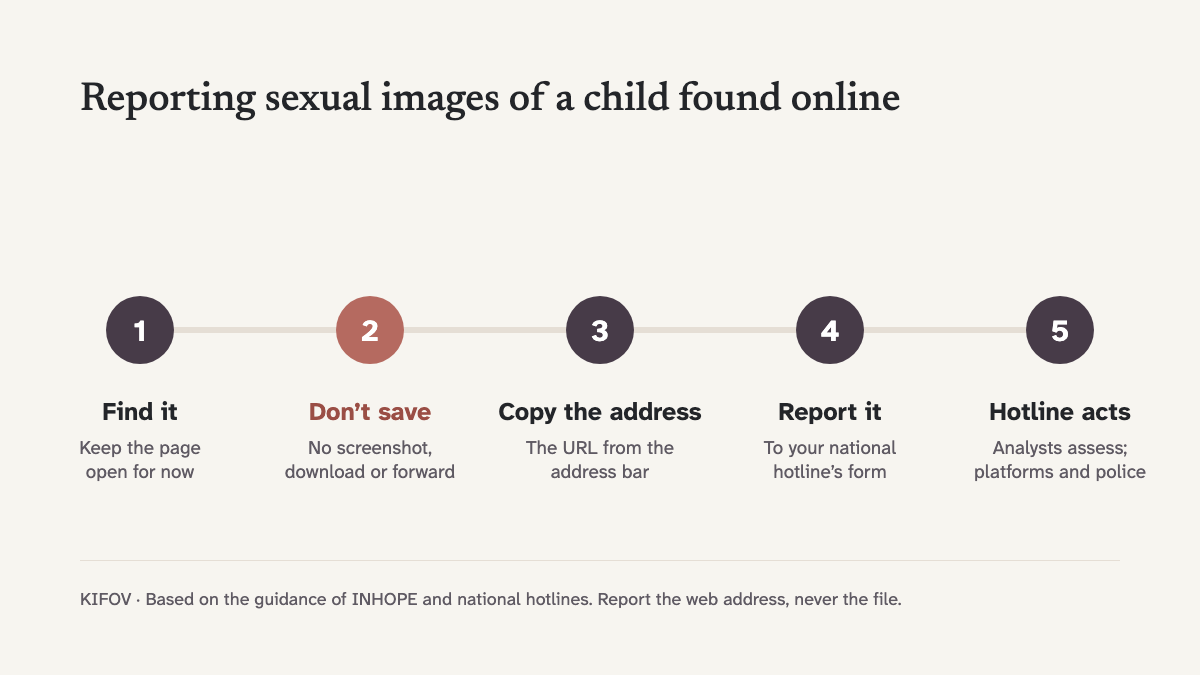
- Do not copy, forward or save any sexual image of the child, even to show the police or a school. Report where it is; the services below know what to do.
- Keep the evidence: usernames, profile links, messages and any payment details, as screenshots of text.
- Report it to the specialist service for your country (below) and to the police. In the United States, the CyberTipline handles sextortion reports; in Canada, Cybertip.ca; in Australia, the ACCCE; in the UK, the CEOP Safety Centre.
- Watch for distress over the following days. Keep the young person company and keep talking.
Getting the images taken down
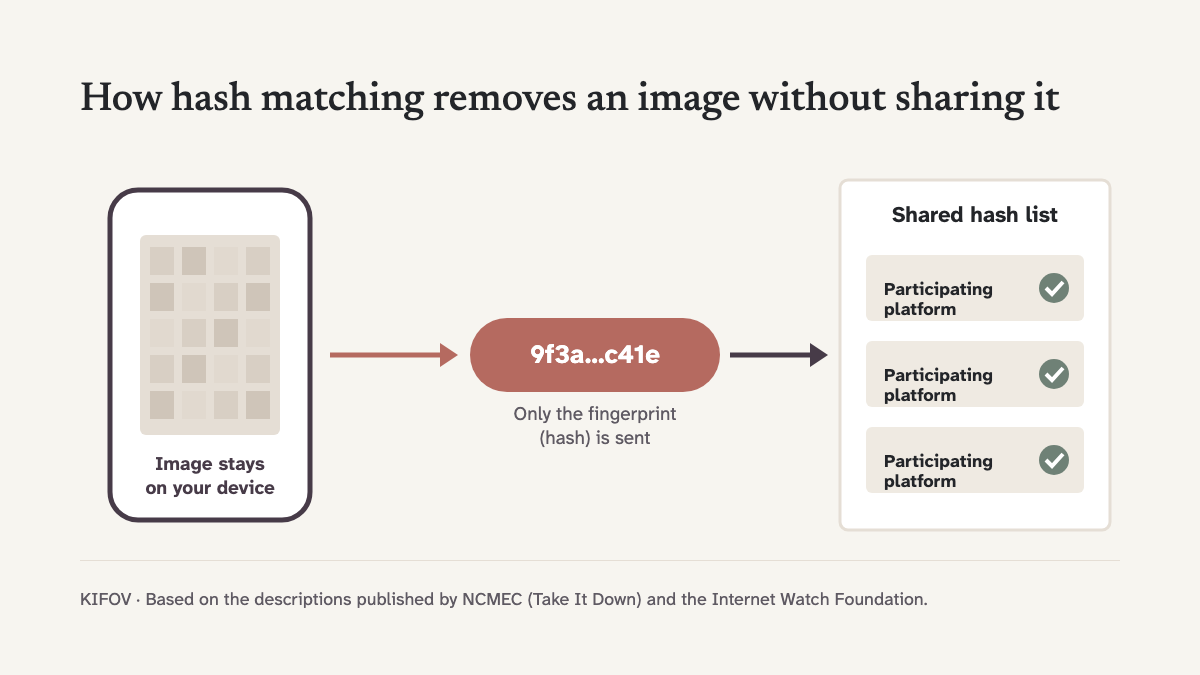
Three services let young people act without sending the image to anyone.
| Service | Who it is for | How it works |
|---|---|---|
| Take It Down (NCMEC) | Images taken when you were under 18, anywhere | Creates a digital fingerprint (a "hash") on your own device. Participating platforms use it to find and remove the image. The image never leaves your device and you can stay anonymous. |
| Report Remove (Childline and IWF) | Under 18s in the UK | Report a sexual image or video of yourself to the Internet Watch Foundation through a Childline account, with support from a counsellor if you want it. |
| NeedHelpNow.ca (Canadian Centre for Child Protection) | Young people, especially in Canada | Step-by-step instructions for asking major platforms to remove an image, and help with what to do next. |
None of them can remove images from encrypted messaging or from someone's own device. They work on public or unencrypted platforms that take part, which is why reporting the account and telling the police still matters. We compare the three services in more detail in our explainer on image removal.