
Stories about harm to children online are among the most important a newsroom can publish, and among the easiest to get wrong. A careless detail can identify a child to their classmates. A dramatic headline about a suicide can put other young people at risk. A link included "for context" can lead readers to the material the story is about.
This guide sets out the practices we follow at KIFOV and recommend to other newsrooms. It draws on the guidance of the World Health Organization and of specialist child protection organisations, which we link throughout. It is not legal advice: laws on reporting about children, court cases and abusive material differ by country, and your own legal team has the final word.
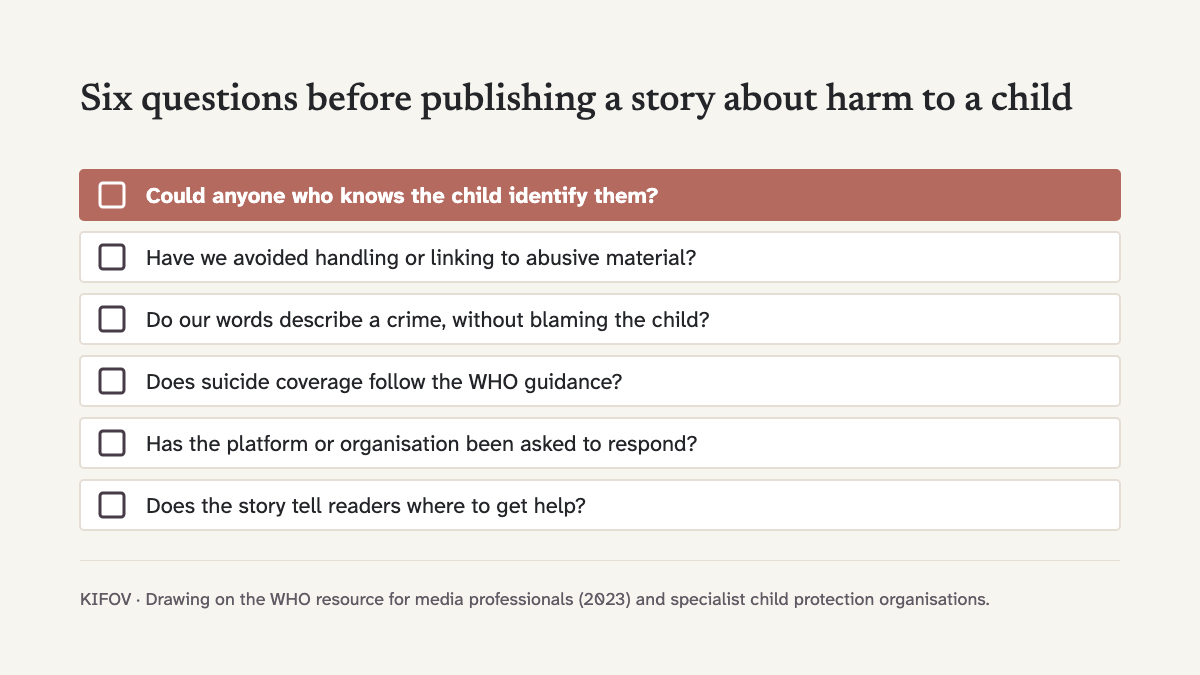
1. Could anyone identify the child?
Removing a name is not enough. Children are identified through combinations of details that each seem harmless: their school, the town, a parent's job, a sibling's age, the date of an incident, a distinctive photo of the street. This is often called jigsaw identification, and it is the most common way stories expose children unintentionally.
- Ask what the child's classmates, neighbours and relatives would recognise, not what a stranger would.
- Do not use images of the child, even pixelated, or of their home, school or belongings.
- Be careful when several outlets cover the same story: details from each can combine into an identification even if no single story identifies the child.
- Remember that a young person who wants to tell their story today may feel very differently in ten years. Their consent alone is not always enough.
2. Never handle the material
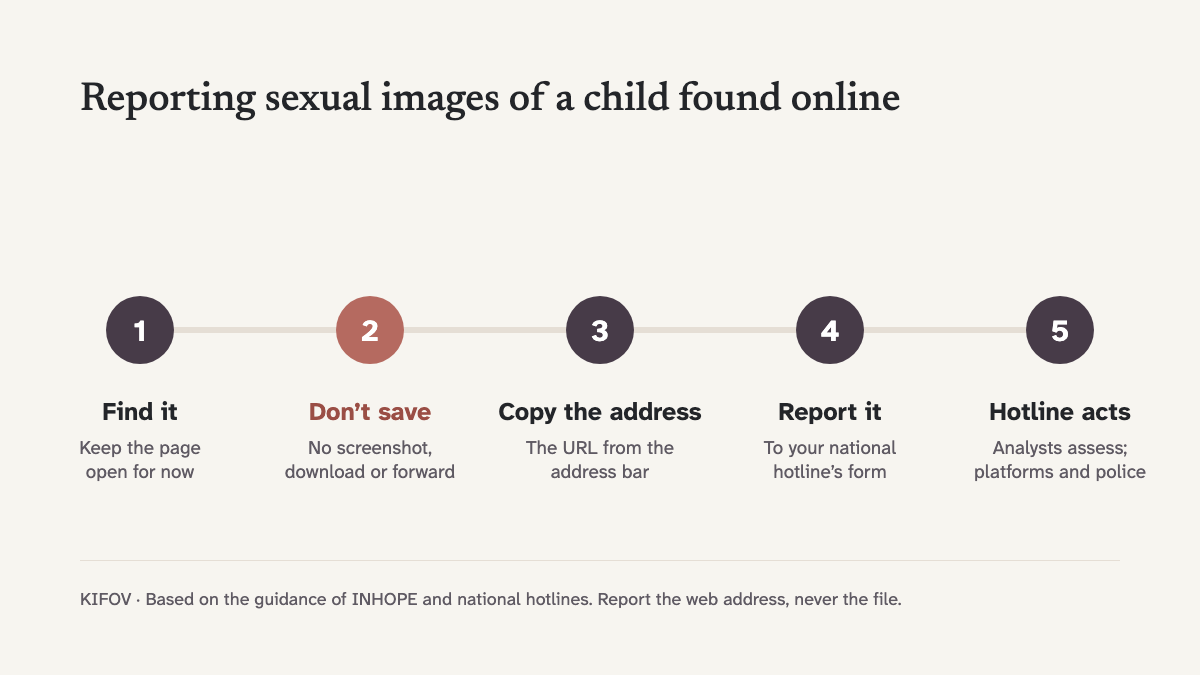
Do not ask sources for sexual images of children, accept them, view them for "verification" or keep them. In most countries possessing or sharing such material is a crime regardless of journalistic purpose, and each copy adds to the harm done to the child shown. If a source offers it, tell them not to send it and explain how to report its location to a hotline; our guide on reporting child sexual abuse material sets out the route. Hotlines such as the Internet Watch Foundation and the members of INHOPE are the organisations authorised to assess it.
Never publish links, usernames, group names or search terms that would help readers find abusive material or offender communities, even to illustrate how easy it is to find.
3. Use words that describe what happened
- "Child sexual abuse material", not "child pornography". Pornography implies consent, which a child cannot give. The Internet Watch Foundation explains on its reporting page why it does not use the term.
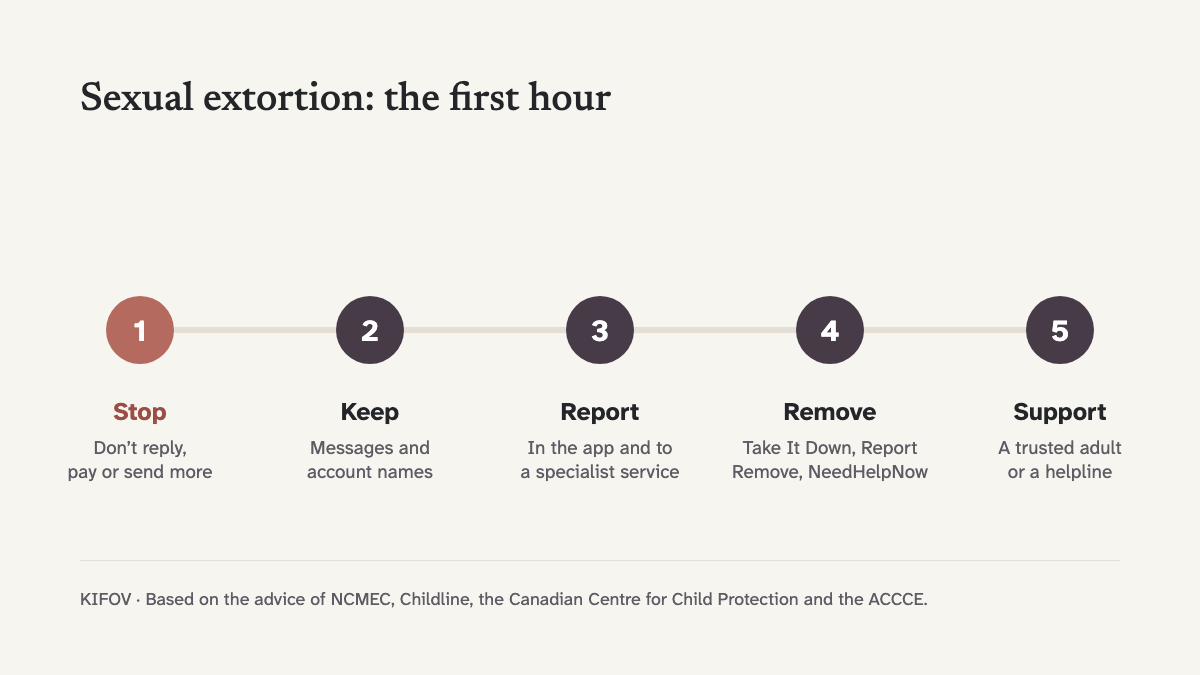
- "Sexual extortion" or "sextortion", not "a sexting scandal". The young person is the victim of a crime, not a participant in a scandal.
- Avoid language that implies a relationship or consent between an adult and a child: "affair", "relationship", "had sex with".
- Do not blame the child for sending an image, being online late, or talking to a stranger. Specialist services, including NCMEC, are explicit that the person committing the crime is to blame.
4. Suicide and self-harm: follow the WHO guidance
The World Health Organization's resource for media professionals (updated in 2023) states that there is evidence media reports about suicide can strengthen or weaken prevention efforts, and sets out what to do and what to avoid. In short:
- Do not describe the method or location, and do not use the word "suicide" in a headline in a way that sensationalises it.
- Do not present suicide as a solution, or as an inevitable result of online abuse or bullying. Suicide is rarely the result of a single cause.
- Do include information on where to get help, and stories of people who found a way through.
- Take particular care with photographs, social media posts and messages from a young person who has died.
5. Platforms, numbers and claims
- Ask the platform before publishing, give it reasonable time, and report what it said, including if it said nothing.
- Treat statistics as what they are. Figures published by hotlines usually count reports received, which rise when detection or awareness improves, not only when harm increases. Say what is counted and by whom.
- Separate what is confirmed from what is alleged, and say which is which.
6. End with help
Every story about harm to children should tell readers where to turn. A short box is enough: the emergency number for your readers' country, a child helpline, and the specialist reporting service. You are welcome to link to kifov.org/get-help/, which lists checked services by country and situation.